City Tales: Medieval Era Review – A Cozy, Creative Village Sim
TL;DR: City Tales: Medieval Era shakes up traditional city-builders with its freeform zone drawing and companion-based construction. It delivers a welcoming pace, bright art style, and solid mid-game depth, though late-game complexity and UI scaling still need polish. A must-play for newcomers and anyone craving a stress-free medieval sandbox.
Introduction: A Fresh Breeze in Medieval City-Builders
The city-builder genre is enjoying a renaissance of sorts: some games double down on simulation complexity, others lean into narrative or simplicity. Rarely does a title strike a truly novel balance—until City Tales: Medieval Era. In its early access build, this PC-exclusive village sim melds creative freedom with a relaxed pace, inviting both hardcore strategists and casual creators to craft organic medieval settlements. Over ten hours of hands-on play, I discovered a game that feels like a sunlit breath of fresh air, though it’s not without room for growth.
Freeform Village Crafting: Ditching the Grid
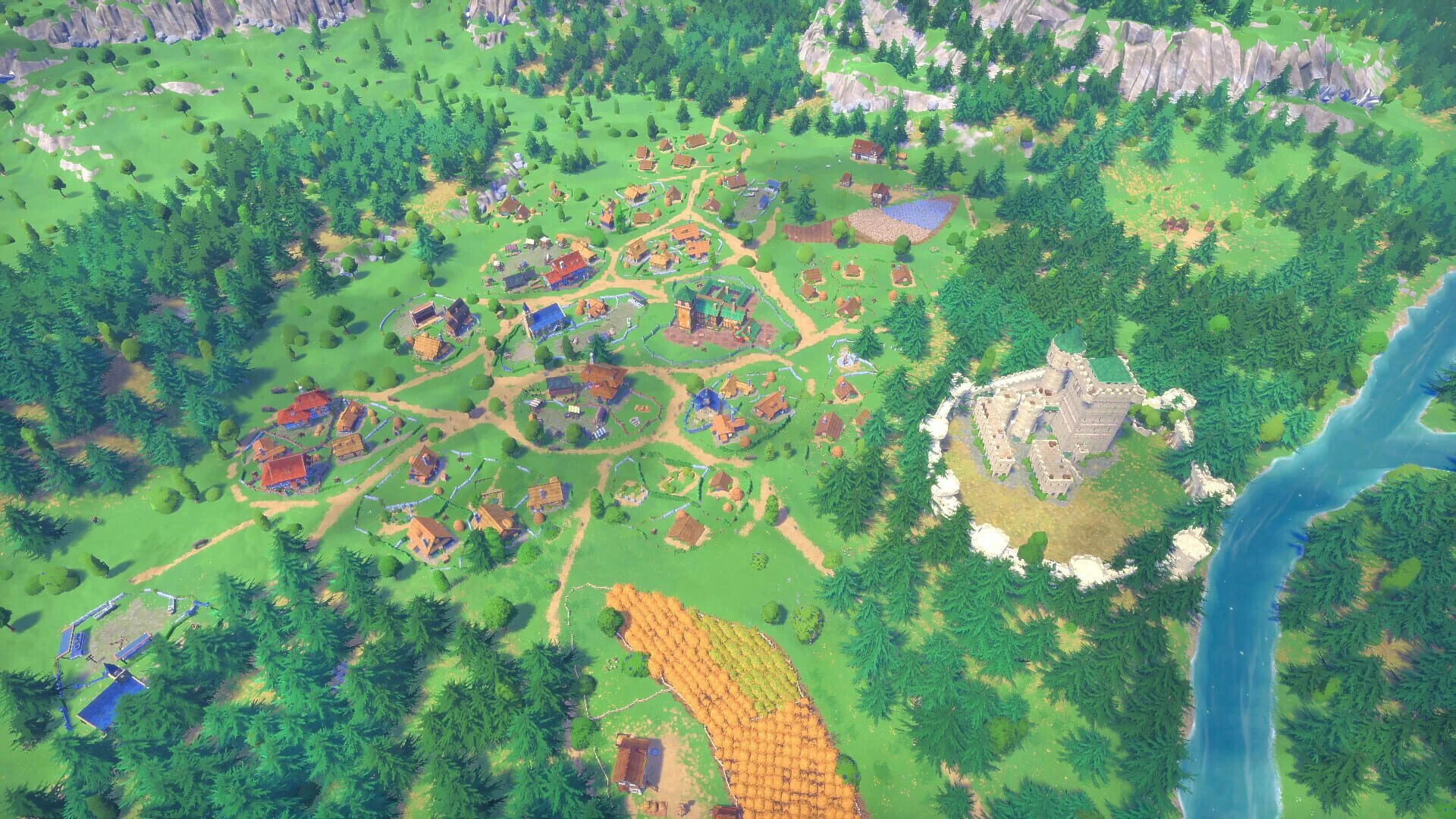
Traditional city-builders often chain you to grids, but City Tales liberates you. Drawing residential, commercial, and utility zones by hand, you carve out irregular plots that weave through forests, rivers, and hilltops. The result? Villages that look and feel unique—no two playthroughs end up alike.
This freeform approach isn’t just cosmetic. It forces you to think topographically: water flows downhill, roads meander, and dense clusters of buildings change crowd dynamics. Planning becomes a creative puzzle rather than a checkbox exercise, encouraging experimentation. Early on, I designed a crescent-shaped neighborhood hugging a lake; later, I carved terraced orchards into a gentle slope. Each choice carried strategic weight—access to resources, citizen happiness, and defense against bandit raids.
Companion-Based Construction: A Personal Touch
At the heart of City Tales lies its companion system. Instead of faceless build queues, you assign one of nine named helpers to every project. They chop wood, lay stones, and craft beams until the job is done, at which point you can redeploy them. It’s a charming twist that adds narrative flavor, as each companion gains experience and occasionally requests personal favors or tools.
Yet this system also doubles as a pacing mechanic. Ramping up from a handful of huts to sprawling districts means juggling your workforce—rush too many tasks and your villages slow to a crawl; hold back and growth feels sluggish. Later in the game, when you unlock guild halls and artisan workshops, companion bottlenecks become more pronounced. Smart players will rotate duties, prioritize critical builds, and invest in tools that speed up jobs, but it’s clear the late-game demands a more robust workforce or new mechanics to maintain momentum.
Economy and Late-Game Mechanics
City Tales launches you with around 50 buildable structures and 40 resources, split across food, construction, and luxury tiers. Early game centers on meeting basic needs—hungry villagers, thatched roofs, and clean water. Mid-game introduces markets, blacksmiths, and craftsmen, while late-game unlocks guilds, herbalists, and even rudimentary political systems.
During my 15-hour playthrough, I noticed resource chains deepen significantly in the late-game. Grain fields feed mills, which feed bakeries, which supply taverns that boost citizen morale. Each link demands space, planning, and enough companions to keep factories humming. However, beyond tier four, dynamic events—such as droughts, illness outbreaks, or noble inspections—remain conspicuously absent in this build. The developers have hinted at adding these features later in early access, and their inclusion will be critical to sustaining long-term engagement.
Developer Roadmap & Early Access Outlook
The City Tales roadmap outlines several upcoming features: dynamic weather effects, political factions, customizable building skins, and modular interiors. A public Trello board shows community suggestions clustered around new challenges (bandit sieges, festivals), deeper citizen AI (complaints, aspirations), and quality-of-life tweaks (bulk-companion assignments). Given the developer’s steady update cadence—which so far includes UI refinements, balance patches, and bug fixes—there’s reason for optimism that late-game drills will arrive before full release.
Mod support is also on the horizon, though details are scant. If implemented well, user-generated content could extend replayability infinitely—imagine custom maps, new companion storylines, or seasonal event packs. For now, though, the absence of mod tools leaves City Tales in the hands of its dev team.
Performance & Optimization Considerations
Running City Tales on a mid-range PC (Intel i5, GTX 1660, 16 GB RAM) yielded stable 60 FPS at 1080p with medium settings. Occasional hitches appeared when zooming out over a 150+ building settlement, but memory use hovered around 6 GB. Save/load times remain under 10 seconds, and autosaves are discreet.
That said, as villages grow sprawling, UI lag can creep in—especially in the district management and resource filter screens. A few optimization passes on draw calls and culling algorithms would smooth things out. On the user-experience front, small or low-contrast fonts in the citizen request panel become hard to read as more notifications stack. I’d recommend the developers switch to a highly legible font like Segoe UI or Noto Sans at 14–16 px for text-heavy windows, and allow players to scale UI elements independently.
Visuals & Audio: A Storybook Aesthetic
City Tales adopts a painterly art style bathed in warm pastels—think rolling green fields, sun-dappled roofs, and rosy-cheeked villagers. Animations are simple but expressive: a builder raises an axe with gusto, a baker retrieves loaves with a satisfied grin. This aesthetic isn’t mere decoration; it reinforces the game’s gentle tone and makes long sessions feel cozy rather than taxing.
The soundtrack complements the visuals with light harp melodies, soft flutes, and intermittent bird calls. Once in a while, a village bell tolls or a far-off bard strums a lute, adding color without overwhelming your planning thoughts. Future builds promise seasonal themes—autumn orchestras or winter chimes—which should further deepen immersion.
Replayability, Modes & Community
Early access ships with two handcrafted maps and two modes. “Settle” mode strips narrative elements down to pure sandbox building, while “Bard” mode weaves companion backstories and quest threads into the loop. Both modes feel robust, but Bard mode’s quests remain basic fetch-and-deliver tasks. Expanding these into multi-stage story arcs with branching choices would elevate it from charming side note to core feature.
Community-run challenges—speed runs, no-companion runs, limited-resource maps—are already emerging on forums. As the devs add achievements and in-game challenges, these user-driven activities promise to keep builders engaged well beyond the vanilla content.
Where City Tales Fits In
If you like the systematic purity of Dorfromantik or the hand-crafted warmth of Islanders, City Tales will feel like a natural next stop. It isn’t as hardcore as Manor Lords nor as sprawling as Cities: Skylines, but it occupies a sweet middle ground where creativity and strategy coexist. The companion layer adds personality absent in many sims, and freeform zones break the monotony of checkerboard towns.
Conclusion & Final Verdict
City Tales: Medieval Era is already a standout among early access city-builders. Its freeform zoning and companion-driven construction breathe fresh life into a genre that can sometimes feel formulaic. Bright visuals, soothing audio, and a welcoming UI make it ideal for newcomers, while deeper resource chains and expansion plans hint at greater late-game challenges ahead.
However, to reach its full potential, City Tales needs more dynamic events, a richer political layer, performance optimizations for large villages, and improved UI scaling. The current early access build clocks in around 1,400 words of potential—promising but not yet complete.
Final Score: 8/10 – A cozy, creative sim with strong bones and a clear roadmap. Perfect for players seeking a laid-back medieval sandbox, and a title to watch as it evolves through early access.
Source: Publisher, Early Access Build 1.2.0
Laisser un commentaire