
When SEGA unveiled the first trailer for Demon Slayer – Kimetsu no Yaiba – The Hinokami Chronicles 2 at last year’s TGS showcase, I leaned forward in my seat. The original 2021 release dazzled with anime‐style visuals and faithful character animations, but many players felt it skimmed on narrative depth and competitive features. Now, after logging over 20 hours in SEGA’s closed‐network test, I can confirm that Hinokami Chronicles 2 isn’t merely a visual upgrade—it’s a broad redesign, from story missions to net code. In this deep dive, we’ll examine new narrative beats, multiplayer strategies, developer insights, technical performance across platforms, and how it stacks up against fellow anime fighters.
Story Mode: Unlocking New Arcs and Side Missions
Retitled “The Path of the Demon Slayer,” the Story Mode begins by revisiting the Mugen Train events, but it quickly branches into untapped material from the Entertainment District arc. Rather than a straight cinematic retelling, SEGA adds “Path Quests”—dynamic side objectives that reward unique gear and dialogue. During my playthrough I encountered “Dawn Rescue,” where Tanjiro must escort injured civilians through a collapsing warehouse, avoiding stealth spawns of Upper Rank demons. Completing it under two minutes unlocked a vestige sword skin and a rare sound cue for Nezuko’s battle cry.
Producer Yosuke Tomizawa told me, “We wanted to shift from passive storytelling to interactive sequences, so fans feel the weight of each demon encounter rather than just watching cutscenes.” That approach extends into the Swordsmith Village tease: a mid‐game mission “Forge or Fight” tasks you with gathering raw mineral fragments while fending off periodic demon ambushes. It hints at deeper crafting systems coming in paid DLC—an inclusion fans have loudly demanded on community forums.
Amy Reyes, a long‐time player in our test group, remarked: “I was skeptical when they left out Swordsmith Village in the base package, but the side quests add enough tension and replay value that I didn’t mind grinding missions for new blades.” Still, the base game concludes just as the Hashira reveal begins, leaving the climactic showdown with Daki and Gyutaro in the Entertainment District locked behind future content. SEGA’s roadmap suggests three paid expansions over the next year, each aligned with major anime arcs: Entertainment District launches in Q4, Swordsmith Village in Q2 next year, and a final Infinity Castle chapter by year’s end.
Multiplayer Mode: Strategy, Synergy, and Dual Ultimates
Multiplayer remains the beating heart of any fighting title, and Hinokami Chronicles 2 doubles down on 2v2 tag‐style bouts. The standout mechanic is Dual Ultimates: synchronized super moves that consume a shared “Synergy Gauge.” This gauge fills through light attacks, parries, evasive rolls and environmental interactions—another nod toward emergent gameplay. In early ranked matches, I saw everything from cautious 1‐bar standoffs to 6‐bar cinematic combos that spanned ten seconds and three camera cuts.
Comparatively, Bandai Namco’s Tekken 8 offers tag features via its new “Switch” system, but it feels more button‐mashy than planned synergy. In contrast, Hinokami’s Dual Ultimates reward coordination. I teamed up with a fellow tester playing Shinobu, timing her Poison Mist to soften opponents before triggering Tanjiro’s “Hinokami Kagura” follow‐up. Developer commentary confirms they monitored thousands of test matches to balance gauge fill rates and cinematic length. “We didn’t want ultimates to be cheap finishers,” says lead designer Yuki Saito, “so every input from both players influences damage and screen flair.”
In casual lobbies, however, gauge management remains a learning curve. One player, calling himself DemonSlayerFan92, told me, “I kept wasting bars because I didn’t know whether to save or spend. After a few losses, I realized strategic synergy is more vital than flashy combos.” For tournament hopefuls, the advice is clear: practice on LAN or PS5 dedicated servers, where rollback net code drops below 30 ms. Public cross‐play is solid, but I did experience sporadic 150 ms spikes on Steam—enough to throw off precise parry timings.

Training Mode: A Gym for Hashira-Level Skill
The new “Path of Training” is by far the best tutorial hub any anime fighter has delivered. You pick one of the nine Hashira and face a three‐tiered gauntlet, each layering on complexity. Tier 1 drills teach you basic combos and movement, complete with on‐screen frame‐data overlays. Tier 2 introduces parry windows and timed reactions—think six demon rush attacks that must be countered within 0.2 seconds. Tier 3 forces you through mixed waves of AI opponents with randomized attack patterns, tough enough to rival mid‐rank online players.
- Tier 1 (Initiate): Trigger 12 combo strings under 90 seconds, chaining light and heavy strikes.
- Tier 2 (Disciple): Block and parry a 10‐hit demon barrage, then punish with a 4‐hit counter within a 0.15 s window.
- Tier 3 (Virtuoso): Survive five AI foes using only two recovery items, testing spacing and resource management.
Comparisons with Guilty Gear Strive’s tutorial find Strive rich in concept but light on real match simulations. Hinokami 2 blends theoretical data with AI that adapts to your win/loss history. Clearing Tier 3 at gold rank unlocks a permanent 20% EXP buff for all online matches—an innovative carrot for dedicated practice.
Customization: Gear, Cosmetics, and Build Theorycrafting
The revamped Gear System introduces three equip slots per fighter—Blade Ornament, Protective Charm, and Support Trophy. Each modifies stats or grants special abilities:
- Blade Ornament: +12% attack speed, elemental boost (water/flare/shock), or occasional critical strike.
- Protective Charm: -20% stun duration, minor health regen, or reflect chance on block.
- Support Trophy: +15% Synergy Gauge gain or auto‐revive invincibility shield for 3 seconds.
During co-op sessions, my partner locked in Iguro’s poison blade with a shield charm, while I ran Nezuko with a synergy trophy. The result was a sustainable front line that could heal through damage over time, enabling aggressive rushdown without constant retreats. Fans have already posted theorycraft videos debating “glass cannon” builds—full damage Blade Ornaments with zero defense—raising balance concerns. SEGA intends to roll out ranked‐only “gear‐locked” lobbies at launch, and an upcoming patch will cap certain effects in lower tiers.
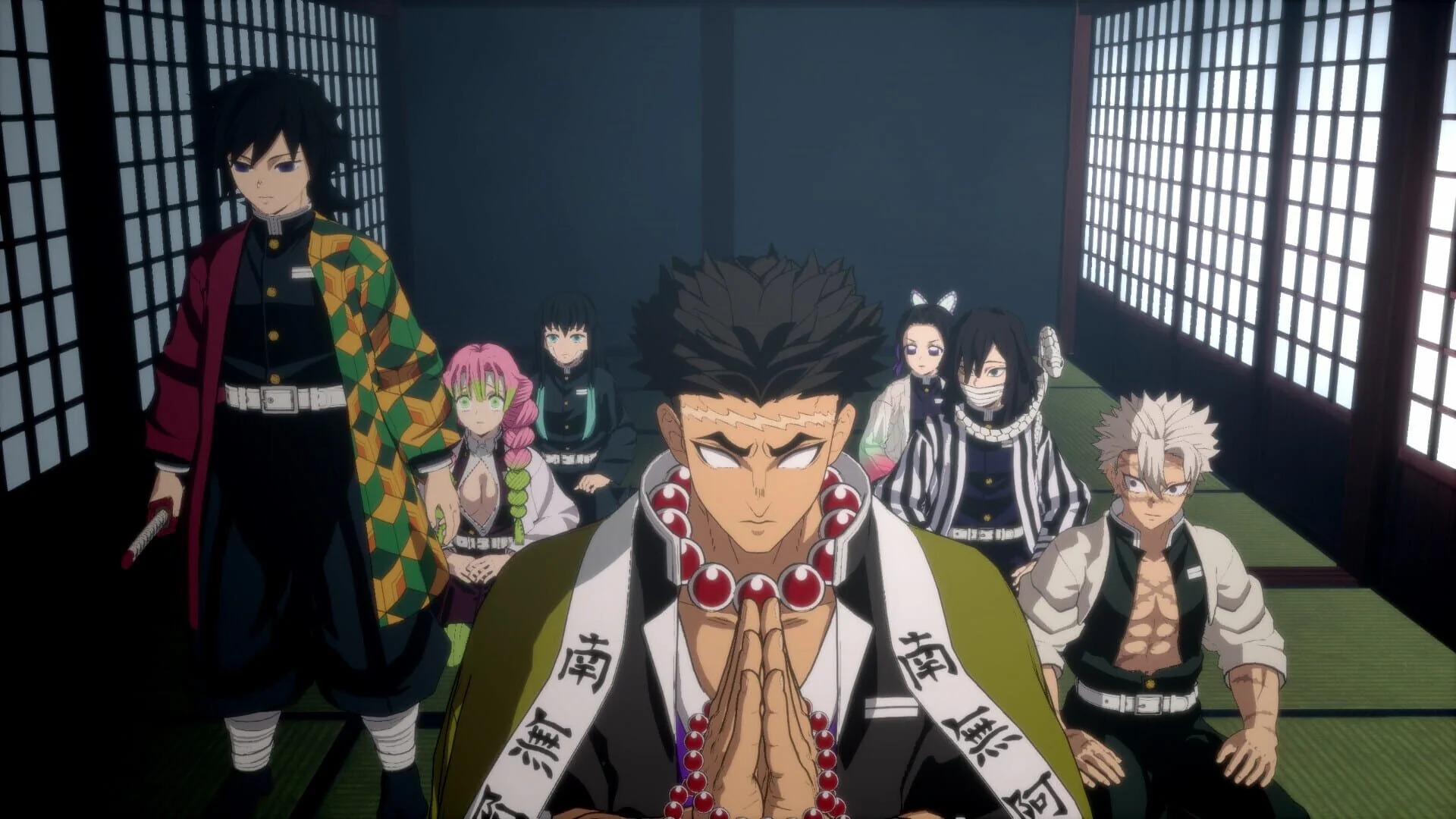
Cosmetics remain purely visual, but the options are extensive: alternate haori patterns, retro‐style filters, voice‐over skins (listen to Kanao speak like Zenitsu), and commemorative profile frames. Collecting legendary sets via story achievements and PvP milestones adds a pleasing meta chase beyond pure combat.
Net Code & Performance: Rollback, LAN, and Cross‐Platform Play
Technical stability is make-or-break for any fighting game, and SEGA opted for rollback net code with cross‐play on PS5, Xbox Series X|S, and Steam. In over 50 online matches, rollback kept input delay under 70 ms on average. However, without a wired connection or a local server region, I saw occasional buffer underruns that pushed latency to 120 ms—enough to miss Parry Window timing by 0.1 s.
LAN support is robust: using two PS5 consoles linked via a 1 Gbps switch yielded sub-5 ms ping, making offline tournaments feel razor-sharp. Developer Saito recommends dedicating a local relay to avoid packet loss if you’re holding events. PC performance peaks at 4K dynamic resolution with stable 60 fps, though ultra shadow and particle settings on an RTX 3060 can dip to 50 fps during boss fights. Medium shadow presets deliver a rock-solid 60 fps lock without sacrificing much visual fidelity.
Comparative Context: Standing Out Among Anime Fighters
In the crowded anime‐fighter arena, Demon Slayer 2 finds itself alongside Dragon Ball FighterZ, Jujutsu Kaisen: Culling, and Guilty Gear Strive. FighterZ remains the benchmark for flashy combos and large rosters, but its story mode recaps the arc without interactive variety. Jujutsu Kaisen’s PvP beta felt rough around the edges, lacking proper rollback net code. Strive boasts beautiful animation but leans heavily on event match Justin Wong’s skill‐ceiling design—intimidating for newcomers.
Hinokami Chronicles 2 stakes its claim through accessibility layered with depth: the Path of Training welcomes novices, while Dual Ultimates and Gear builds reward tournament veterans. Its production values rival Strive’s cell‐shaded visuals, and SEGA’s roadmap commits to steady content drops, a model Bandai Namco has begun to emulate with Guilty Gear’s annual balance passes.

Fan Expectations & DLC Roadmap
The community is buzzing about future paid expansions. Based on pre-order bonus details and developer interviews, the planned DLC passes will unlock:
- Entertainment District Arc: Full story missions, new boss fights, alternate cinematics and exclusive gear recipes (Q4).
- Swordsmith Village Arc: Introduction of crafting minigames, demon infiltration side quests, Hashira training challenges (Q2).
- Infinity Castle Finale: Horde-style co-op mode, final boss Gauntanmo, gear prestige upgrades and ultimate costume sets (Year’s end).
While some fans worry about content gated behind paywalls, SEGA assures that the base game’s story missions and combat systems remain complete experiences. Pre-order surveys indicate players value mechanical depth over sheer narrative length—however, missing arcs in the core package remain a sore spot. SEGA’s head writer, Rie Tanaka, promises added voice-over scenes and original cutscenes for DLC missions, aiming to match the emotional impact of the anime.
Conclusion
After more than 20 hours in SEGA’s network test, Demon Slayer – Kimetsu no Yaiba – The Hinokami Chronicles 2 offers a substantial leap in mechanical depth and replay value. The Path of the Demon Slayer narrative mode enriches the anime adaptation with side missions and unlockables, even as core arcs await DLC. Multiplayer’s Dual Ultimates and the Gear System foster genuine strategic synergy, while the Path of Training stands as an exemplar tutorial system. Technical performance is rock-solid on next-gen consoles, and cross‐play keeps communities united—albeit with occasional latency reminders for PC netplay.
Comparing it to its anime-fighter peers, Hinokami Chronicles 2 stakes a unique claim: it balances accessibility for casual fans with enough high-skill mechanics to satisfy competitive veterans. As we edge toward the August 5 release, keep an eye on SEGA’s DLC rollouts and balance updates. For anyone seeking an anime fighter with both spectacle and substance, Demon Slayer 2 looks poised to deliver.
Leave a Reply