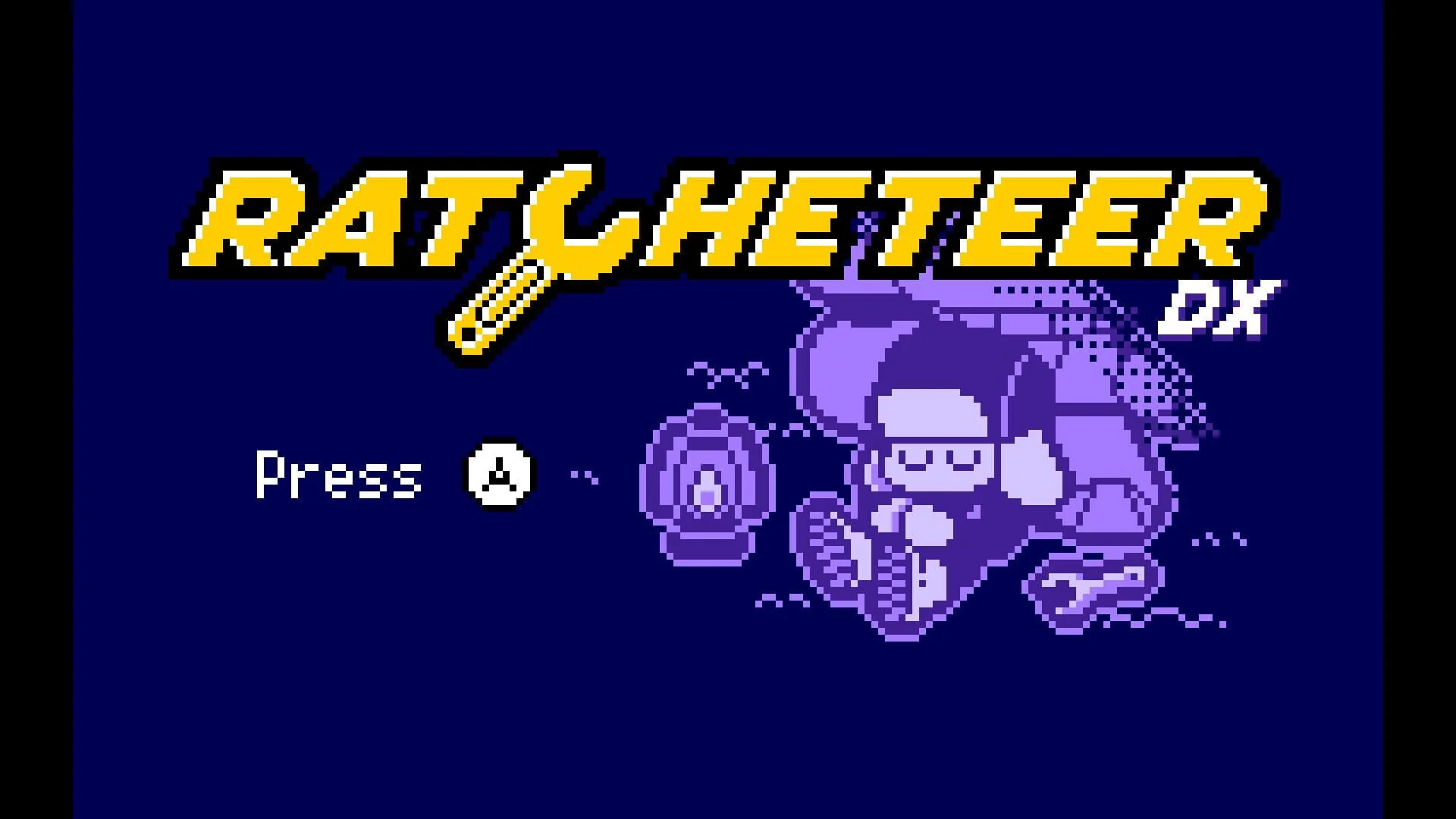
Frozen dungeons, Playdate roots, and a wrench that won me over
The moment Ratcheteer DX dropped me into its frozen, end-of-the-world colony, I could feel the Playdate DNA humming underneath. This is absolutely a “small” game in 2026 terms: five dungeons, a 4-5 hour runtime, chunky pixels, and a soundtrack straight out of the late ’90s. But over a weekend with the Switch version, it also felt like one of the more confident Zelda-likes I’ve played in a while, precisely because it knows its limits.
Instead of sprawling checklists and open-world bloat, Ratcheteer DX gives you a tight toolkit, a compact overworld, and a handful of dungeons where almost every screen has a purpose. It’s the kind of game where you feel the constraints of its original Playdate hardware, but in a good way – the systems are lean, the puzzles are focused, and nearly every item you earn pulls double or triple duty.
It’s not frictionless. The platforming pushed my patience more than once, and there are jumps and ledge interactions that feel harsher than they need to. But by the time I rebuilt the endgame mech and marched it toward the finale, I was genuinely attached to this weird little world and its wrench-wielding mechanic.
Key Takeaways
- Short, sharp Zelda-like: About 4-5 hours long, with five compact dungeons and a small but cleverly interconnected overworld.
- Playdate roots, better controls: The DX version’s button mapping and streamlined menus feel far better suited to Switch and PC.
- Smart, multipurpose items: Every tool matters both in combat and puzzles, making progression feel intentional rather than bloated.
- Great chiptune and retro vibes: Strong soundtrack, flexible color palettes, and CRT-style filters sell the nostalgic presentation.
- Fussy platforming: Tight edge detection, a finicky glide, and certain enemy interactions can be frustrating, especially in later dungeons.
An ice-age Zelda-like with a blue-collar premise
Ratcheteer DX starts with a simple, slightly bleak question: when the planet freezes over, do you try to outlast the cold, or freeze yourself and hope for a future thaw?
You play as a mechanic in an underground cryo colony, keeping the machinery running while most of humanity is literally on ice. Pretty quickly, the game moves beyond that “neat sci-fi prompt” and starts layering in little pockets of story: surface-dwelling survivors who refuse the freeze, an alien race with offbeat, EarthBound-style weirdness, and a slow-burn thread about trust between these different communities.
What I appreciated is how restrained all of this is. The lore’s there if you talk to people and poke around, but the game doesn’t drown you in monologues. By the time I reached the final dungeon, I had a surprisingly clear sense of who I was protecting and why this frozen world mattered, despite spending most of my time pushing blocks, toggling switches, and whacking enemies with a wrench-sword combo.
From crank to controller: why DX feels “right” on Switch
Ratcheteer started life as a monochrome Playdate game built around that handheld’s two face buttons and its now-famous crank. DX takes that exact core and rethinks the interface for standard controllers and keyboard. You can feel the constraints of the original design, but the Switch version honestly feels like where the game always belonged.
On Playdate, frequent item swapping and map checks meant you were dipping into menus a lot. With DX, your main tools are sensibly mapped to buttons, and I could flip between lantern, drill, jump boots, and my trusty ratchet without pausing the action. It turns what might have been a slightly fiddly, stop-and-start experience into something much smoother and more intuitive.
After a couple of hours, I stopped thinking about the controls entirely, which is the best compliment I can give a port like this. They don’t feel flashy, they just get out of the way and let the puzzle design breathe.
Dungeons, tools, and that satisfying Zelda-like “click”
The dungeon structure is classic top-down Zelda in miniature. There are five major dungeons, each with its own central mechanic, a new tool to learn, and a boss that leans into whatever ability you just picked up. They’re all relatively small – you’re not getting multi-hour labyrinths here – but they’re built with a noticeable confidence.
Your starting kit is simple: a lantern to push back the gloom of the underground and reveal enemy weaknesses, and a ratchet-sword hybrid for smacking things and interacting with machinery. It’s basic at first, but as the game adds more tools, the moveset broadens in quietly clever ways:
- Jump boots open up platforming segments and more vertical puzzle layouts.
- A drill-shield doubles as both a defensive tool and a way to chew through cracked walls and obstacles.
- A speed/spin-style tool that will feel very familiar (and very fun) to Sonic fans, especially in sections built around momentum.
What stood out to me is how rarely any of these feel like one-and-done gimmicks. Once an item joins your arsenal, it keeps being relevant. The game is constantly remixing combinations — jump then glide, drill then spin, lantern then strike — in ways that stay fresh across the whole runtime.
The dungeons themselves are maybe a touch too similar visually, but structurally they’re nicely honed. Locked doors fold back into shortcuts, side paths reward you with heart pieces and alien runes, and each dungeon has at least one “oh, that’s smart” puzzle moment. It’s not trying to out-puzzle the wildest Zelda temples, but it rarely wastes your time either.
Each boss leans heavily into your latest tool without resorting to long, tedious phases. They’re short, readable fights with just enough bite to feel satisfying when you finally land that last hit. Beating a dungeon nets you a key component to repair a giant mech, which becomes central to the game’s finale — a neat payoff to what initially feels like a simple collect-the-things structure.
A compact overworld that respects your time
Outside of dungeons, the overworld ties everything together in a way that feels almost old-fashioned — in a good way. Areas loop back into each other, early screens hide secrets you can only reach with later tools, and there’s just enough optional stuff tucked into corners to make backtracking feel worthwhile instead of like busywork.
Scattered stone wells are the big structural trick here. Jump into one, and you drop into an underground network that effectively acts as a fast-travel system. Unlocking new wells as you explore means the map slowly shrinks in a pleasant, mental way: you start the game thinking in separated chunks and end it with a sense of how all the pieces connect under the ice.
Coming from bloated, checklist-heavy action-adventures, Ratcheteer DX’s scale feels almost refreshing. It’s modest by console standards — you can absolutely clear everything in an evening or two — but there’s very little fluff. When I deviated from the main path, it was usually to chase a visible chest, a suspicious wall, or a short side room I’d mentally bookmarked.
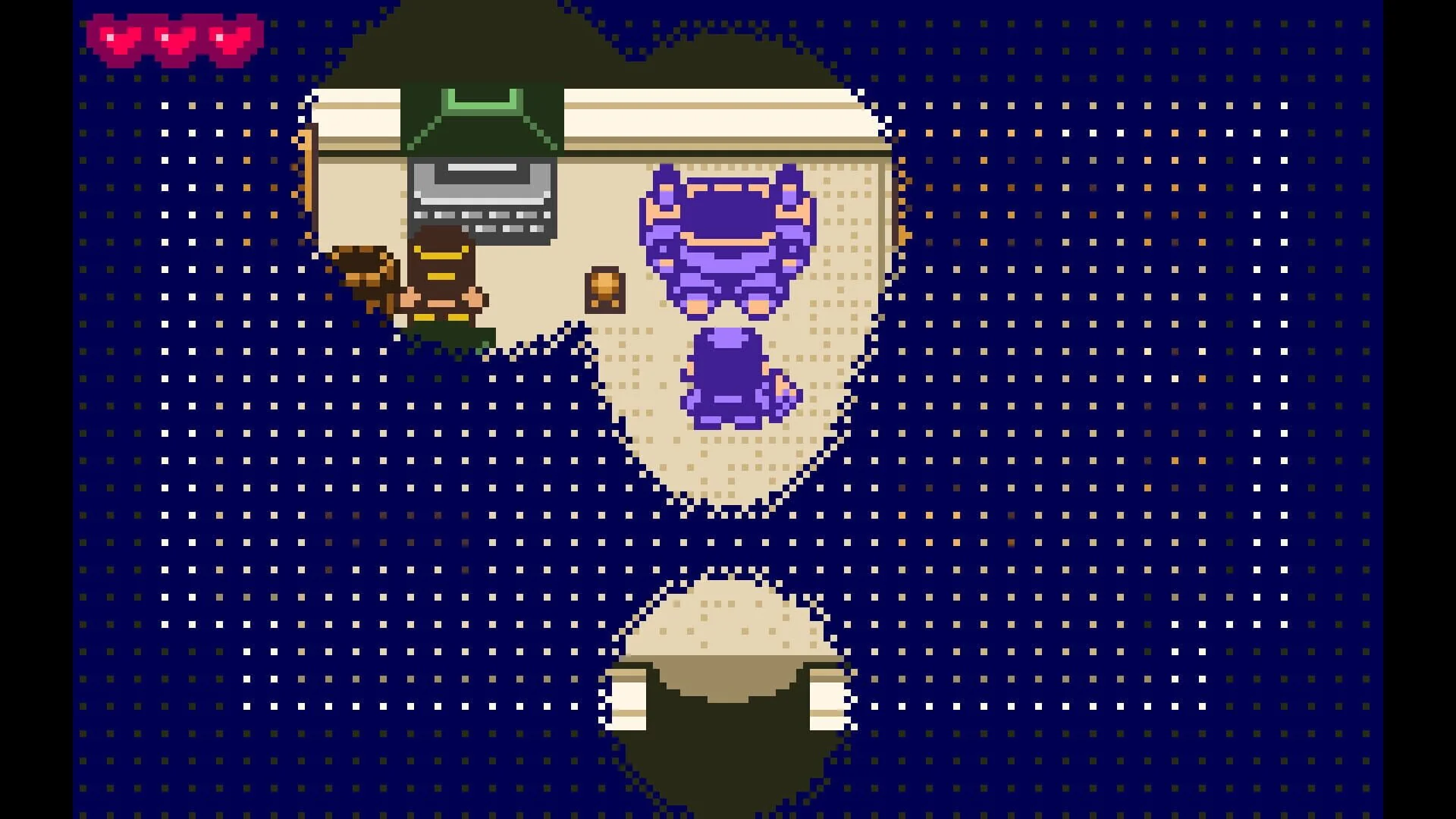
Navigation is mostly clear, though there were a couple of stretches where I had that classic “okay, what did I miss?” wander. Those were solved with a round of fast-travel hopping and rechecking older areas, and in fairness, that re-exploration often paid off with extra health or lore nuggets.
Platforming: the one system that never quite thawed
If there’s a part of Ratcheteer DX that really rubbed me the wrong way at times, it’s the platforming. Conceptually, I like that the game folds light platforming into its top-down dungeon design; in practice, the execution is harsher than its otherwise cozy tone suggests.
Edge detection is unforgiving. You’ll think you’re safely lined up on a platform only to slip off the side and take damage. This happens often enough that it starts to erode the otherwise smooth puzzle flow. The glide ability you get partway through the game doesn’t always help either — its arc makes it surprisingly easy to overshoot small ledges.
A couple of specific design choices add to the irritation:
- Ghost enemies in the fourth dungeon can snipe you mid-jump, forcing you into pits or hazards in ways that feel borderline cheap.
- Snow “quicksand” patches punish tiny positional mistakes with a full reset of the room, which got old fast when I was just a pixel or two off.
None of this is insurmountable — this isn’t a masocore platformer hiding inside a Zelda-like — but I absolutely had stretches where I wasn’t solving puzzles so much as brute-forcing jumps I knew how to do, just not within the game’s extremely narrow margins. A slightly more generous ledge tolerance would have gone a long way.
Pixel art, palettes, and an evocative chiptune score
Visually, Ratcheteer DX wears its retro inspiration on its sleeve. If you have fond memories of Game Boy Color or early GBA-era dungeon crawlers, the chunky sprites and simple tilesets will hit the nostalgia center of your brain almost immediately.
The opening areas are intentionally gloomy. Your lantern only carves out a small bubble of visibility, and the palette is fairly muted. As the game goes on, though, things brighten and soften. Later zones lean into pastel hues and more contrast, and the color work gives certain rooms a surprisingly cozy glow given the apocalyptic premise.
One of my favorite touches is how DX lets you customize that look. There are multiple palettes and filters baked in, including:
- Full color — the best way to play, in my opinion, and clearly the one the art is tuned for.
- Black and white / Playdate-style greys — a nice nod to the original handheld release.
- Game Boy “pea soup” green — aggressively nostalgic in exactly the way you’d expect.
- Visual filters like scanlines, dot-matrix, and grid overlays, plus scaling options to get the image sitting just right on modern displays.
On the audio side, the chiptune soundtrack does a lot of heavy lifting. There’s this melancholic heroism running through the main themes — a sense of trudging on in impossible cold — that fits the setting perfectly. Overworld tracks are wistful without dragging, and the boss music punches just hard enough to feel climactic without clashing with the lo-fi aesthetic.
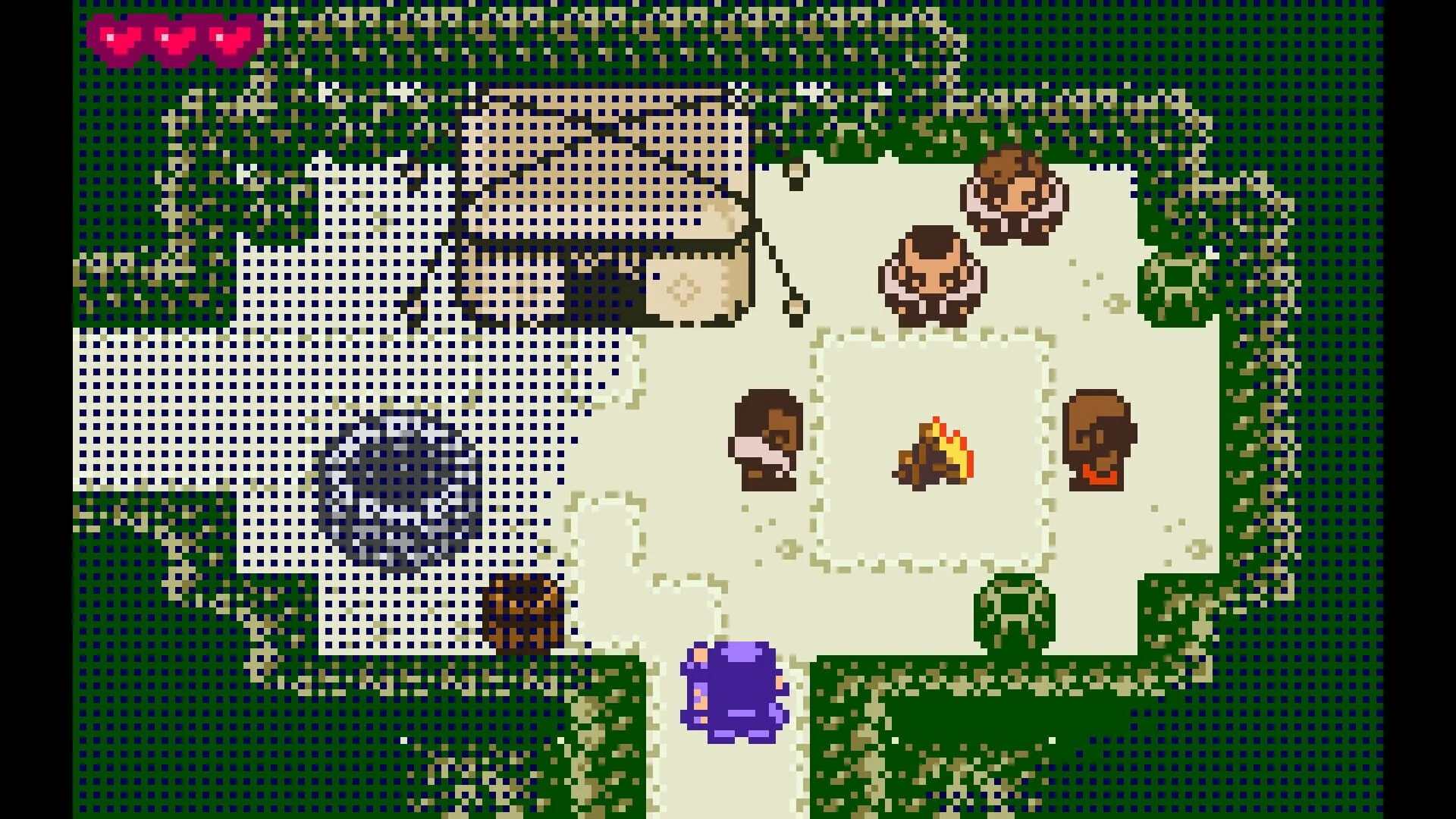
I played entirely on Switch, and performance was rock solid. Ratcheteer DX targets 60fps, and I never saw it dip, even in busier rooms. Between the responsive input and the audio-visual presentation, the game really leans into that “lost cartridge from 1999” fantasy while still feeling modern where it matters.
Length, pacing, and value
I wrapped the main story, grabbed a healthy chunk of optional collectibles, and poked every suspicious corner I could find in just under five hours. If you beeline the critical path, you could shave that down; if you’re more methodical than I am, maybe you stretch it past five. Either way, this is very much a weekend game, not a multi-week commitment.
Given its Playdate origins, that runtime feels appropriate. On Switch and PC, it’s definitely on the shorter side of the Zelda-like spectrum, but the important thing is that it rarely feels padded. New tools arrive at a quick clip, dungeons don’t overstay their central gimmick, and the mech-building meta-goal gives you a simple but effective sense of progress.
There’s no sprawling post-game or endless challenge mode lurking here; when the credits roll, you’ve essentially seen what Ratcheteer DX has to offer. Personally, I’d rather have this kind of focused, self-contained adventure than another 30-hour collectathon. At its price point, the package feels fair, especially if you’re the type who values craft and pacing over sheer hours.
Who Ratcheteer DX is (and isn’t) for
After finishing it, I came away with a pretty clear sense of its ideal audience.
- You’ll probably love it if: you enjoy classic top-down Zelda, appreciate tight, item-driven dungeon design, and want something you can complete in a couple of sittings without a guide.
- You’re into retro aesthetics: chiptune soundtracks, pixel art, and playful display filters make you happy, not skeptical.
- You like focused indies: you’re okay with a game doing one thing very well instead of chasing open-world trends.
- You might bounce off it if: you’re easily frustrated by fussy platforming, or you want something longer, denser, and more mechanically complex than a lean throwback adventure.
Bottom line: a small, confident Zelda-like worth thawing out
Ratcheteer DX feels like a designer taking a second pass at a strong idea and sanding off most of the rough edges. The core was already there on Playdate — a bleakly charming ice-age premise, clever multipurpose tools, tidy dungeon layouts — but the move to Switch and PC gives it the breathing room and control scheme it always deserved.
The platforming quirks are the one system that never fully gels, and if you’re particularly sensitive to slippery jumps and strict ledge logic, prepare for some gritted teeth in the back half. Yet even with that frustration, the overall package won me over: a melancholy chiptune score, purposeful item design, a world just big enough to reward curiosity, and a finale that pays off the mech-repair framing in a satisfying way.
It’s not a reinvention of the Zelda-like formula, and it doesn’t need to be. Ratcheteer DX is a compact, confident adventure that understands exactly what it wants to be and sticks the landing more often than it stumbles.
Score: 8/10 — A charming, tightly designed dungeon crawler that stumbles on platforming but shines almost everywhere else.
TL;DR
- Short, focused Zelda-like dungeon crawler set in subterranean cryo colonies during an ice-age apocalypse.
- Originally a Playdate game, now upgraded for Switch and PC with full color, smoother controls, and visual/audio options.
- Excellent chiptune soundtrack and retro pixel art, with multiple palettes and filters for extra nostalgia.
- Five compact but satisfying dungeons built around smart, multipurpose tools and a mech-building endgame hook.
- Platforming is the weak link, with strict edge detection, tricky gliding, and some frustrating enemy/hazard interactions.
- Wrapped in about 4-5 hours, it’s a polished, purposeful indie adventure that respects your time and mostly delivers on its ambitions.
Leave a Reply