
Resident Evil Requiem is the most important game the series has made since RE4
Resident Evil has reinvented itself so many times that “this changes everything” has almost lost meaning. Requiem earns that line. After a full playthrough on PS5 and a second run on PC, what struck me isn’t just that it’s an excellent 30th‑anniversary celebration – it’s that it feels like Capcom consciously drawing a line under the first 30 years and sketching the next 30 on the same page.
This isn’t a museum tour of old ideas. It’s a deliberate mash-up of classic, suffocating survival horror and slick over-the-shoulder action that actually works in practice, not just on paper. By the time the credits rolled, Requiem had convinced me of two things: the series as we knew it is officially over, and survival horror as a genre has a brand new reference point.
Key Takeaways
- Dual structure that actually matters: Grace’s first-person sections are pure, nerve-shredding survival horror; Leon’s third-person chapters channel refined RE4-style action without losing tension.
- Nostalgia with teeth: Callbacks to classic Resident Evil are baked into level design, inventory systems, and perspective tricks instead of tossed in as shallow fan service.
- Old-school anxiety, new-school control: Claustrophobic layouts, scarce resources, and meaningful item management coexist with smooth aiming, dodging, and brutal finishers.
- Stumbles where RE often stumbles: Puzzles are mostly lightweight, and the late game leans a bit too hard into bombastic action.
- Pivotal for the series’ future: As a 30-year capstone about “ending” the outbreak era, Requiem forces Resident Evil 10/X to invent a new kind of terror in a world that’s finally crawling out from under bioterror.
A 30-year capstone that plays like a manifesto
My first hour with Requiem was oddly emotional. The opening hours deliberately echo the slower, more grounded dread of the PS1 and GameCube era: tight corridors, stingy ammo drops, doors that you open with the quiet dread of someone peeking into a dark basement. But my controls, camera, and feedback felt straight out of the modern remakes.
Requiem is obsessed with the franchise’s own history, but not in the usual “remember this hallway?” way. It borrows the feeling of the early games – being underpowered, partially blind, one bad decision away from doom – and then funnels that through the modern, over-the-shoulder language that Capcom has been perfecting since Resident Evil 2 Remake and Village.
The result is a game that plays like a thesis statement: this is what “Resident Evil” has meant for 30 years, and this is how it can still be terrifying without behaving like it’s 1998.
Two protagonists, two horror dialects
The smartest design decision here is the dual-protagonist structure. You alternate between Grace Ashcroft and Leon S. Kennedy, but it’s not just a story gimmick; it’s two distinct horror games stitched together.
Grace’s campaign is first-person, low-visibility, and deeply mean in the best survival-horror way. She moves slower. Her sight line is narrow. The flashlight only shows you what’s immediately in front of your face, so your imagination does most of the work. Resource scarcity isn’t just a slider here; you will absolutely walk into rooms with less ammo than you’d like, and the game doesn’t apologize for it.
There’s one sequence in the ARK complex that crystallized what Requiem is trying to do. I ended up crouched inside a metal storage container, listening to lickers scrape along the floor and ceiling outside. I could barely see past the crate’s opening. Moving meant relying almost entirely on audio — counting the rhythm of their claws, nudging forward, then freezing when the sound bounced off a nearby wall. It felt like a spiritual successor to fixed camera angles: not literally the same, but weaponizing the same idea of “you do not control what you see.”
Grace’s sections are where the “survival” part of survival horror lives. You’re scavenging, crafting with disgusting materials (yes, the infected-blood mechanics are every bit as gross as you’re imagining), and praying your improvised tools will actually drop that blistered, swollen-headed zombie before it closes the last couple of meters.
Leon’s campaign, by contrast, is a victory lap for modern Resident Evil action. We’re back in over-the-shoulder third-person, with crisp aiming, satisfying staggers, and vicious melee finishers that feel like a natural extension of RE4’s roundhouse kicks and suplexes.
What surprised me is how tight the combat arenas are. Capcom resists the temptation to turn Leon into an outright superhero. Many firefights happen in chokepoints, stairwells, or narrow plazas where you’re constantly backing into something, trying to line enemies up for limb shots and crowd control. Even when you’re better armed, the layouts keep you honest. You never feel like you’ve transcended the horror, just that you’ve learned to weaponize your fear.
By the second half of the game, Leon does dominate screen time, and you feel the genre tilt toward action. But because your memory is still marinated in Grace’s helplessness, that power curve lands more like earned catharsis than tonal whiplash.
Nostalgia that actually pulls its weight
I went in expecting fan service. You don’t call a game Requiem for the series’ 30th anniversary and not poke those old scars. What I didn’t expect was how often the nods to past games show up as systems, not just posters in the background.
There are echoes of the original mansion’s puzzle-box level design in the ARK facility’s looping corridors and layered key systems. There are perspective tricks that very obviously riff on classic fixed cameras: doors and corners arranged so that, even in first- or third-person, you’re forced to commit to a blind angle. There’s a dual-inventory setup that feels like a cheeky conversation between the briefcase Tetris of RE4 and the harsh limitations of the early games.
Requiem constantly winks at long-time fans — a familiar hallway here, a deliberately framed shot there, a certain city skyline late in the story — but it rarely pauses the game to say, “Look, remember this?” It’s more interested in answering, “What if we took that feeling and made it work in 2026 design language?”
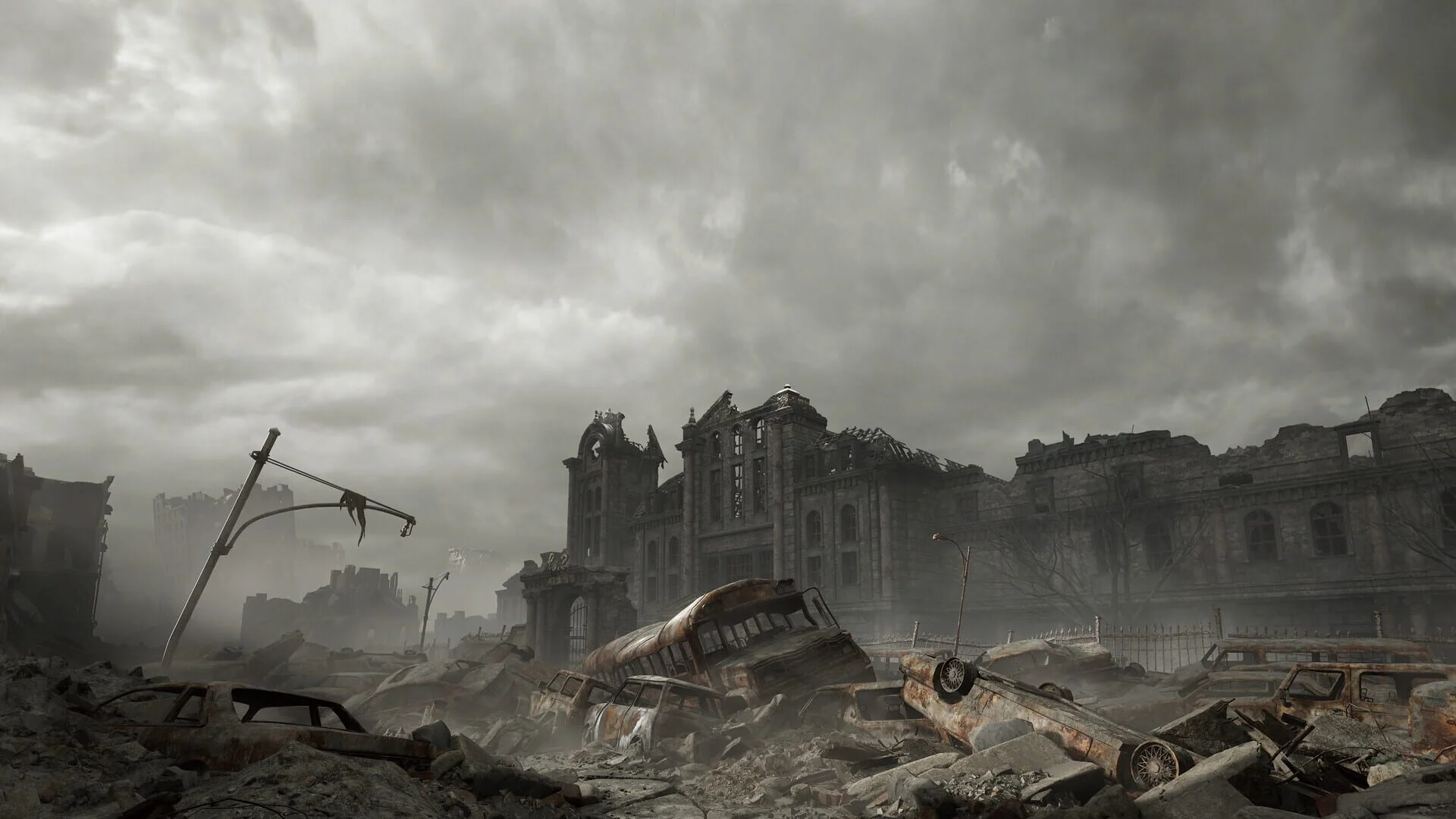
Because of that, the heavy nostalgia never made the game feel trapped in the past. Instead, it reads as Capcom auditing its own history, keeping what still works under pressure, and quietly discarding the rest.
Survival horror, version 3.0
Moment-to-moment, Requiem is the cleanest integration of classic survival-horror tension and modern action I’ve played in the series. On PlayStation and Xbox, the responsive aiming and generous movement options mean you never die because the controls fought you. On PC with mouse and keyboard, lining up precision shots almost feels unfair — until the game simply throws a little less ammo your way and you realize it’s accounted for that too.
What really nails the atmosphere is how old-school the constraints still feel:
- Limited resources that force you to commit to weapons and upgrades instead of hoarding everything “for later.”
- Claustrophobic layouts where backtracking is dangerous but often necessary to unlock shortcuts or snag one more healing item.
- Inventory tension that makes you weigh an extra stack of bullets against a crucial quest item or tool.
- Save pacing that’s lenient enough not to feel cruel, but spaced so that a bad 15 minutes can still cost you dearly.
The bosses follow a similar pattern. They’re not the most mechanically complex fights in the genre, but they’re staged to squeeze every last drop of stress out of limited space and ammo. There’s one mid-game monstrosity in a flooding chamber that had me juggling valves, add-on enemies, and my last shotgun shells in a way that felt classically “Resident Evil” without leaning on cheap one-hit kills.
Where Requiem stumbles
For all its confidence, Requiem isn’t flawless.
The puzzles are the biggest letdown if you grew up on color-coded crests and obscure item descriptions. Most obstacles are straightforward: rotate a few dials, match symbols, reroute power. They’re satisfying enough in the moment, but rarely linger in your memory the way, say, the old mansion’s clock and statue puzzles do. It feels like Capcom didn’t quite trust players to get stuck in a 2026 release.
The late-game tilt toward Leon-heavy action also occasionally goes too far. A couple of sequences edge close to the excesses that made RE6 so divisive — exploding set pieces where you’re more a passenger than a participant. They’re flashy, yes, and they land harder emotionally because of the story stakes, but they also bulldoze some of the carefully built dread.
Finally, if you’ve followed the series closely, some story beats are predictable. Requiem is so busy cleaning up three decades of lore that a few twists feel like boxes being ticked. The character moments — quiet scenes, tiny bits of body language, that glimpse of a ring on Leon’s finger — hit harder than the overarching plot revelations.
The bridge to Resident Evil 10 — and a new kind of terror
What fascinates me most about Requiem isn’t just the game I played, but the series it leaves behind. This is a story about endings: ending outbreaks, ending certain characters’ arcs, ending an era where “zombie apocalypse” is the default state of the world. It’s unexpectedly hopeful for a franchise built on constant catastrophe.

And that’s exactly why it’s such a pivotal bridge. By clearing the slate, Requiem doesn’t just set up Resident Evil 10 (or Resident Evil X, if Capcom continues the Roman numeral gag) as “the next sequel.” It forces that game to answer a much harder question: what does survival horror look like when humanity is no longer seconds from extinction, but living with the scars?
A post-Requiem world is full of people who remember running from bioweapons, who have lost families to corporate experiments, who flinch at every news report about a new pharmaceutical giant. The idea of Resident Evil shifting from “we must stop the virus” to “we must live with what it did to us” is a genuinely exciting prospect. Less spectacle, more trauma. Less global meltdown, more focused, intimate nightmares.
Requiem feels like Capcom saying: “We know we can still do the old thing better than almost anyone. Now we’re giving ourselves permission to try something else.” That’s a rare luxury for a franchise this old that hasn’t been hard-rebooted.
Bottom line: a 9/10 farewell that dares the series to evolve
Resident Evil Requiem is a hell of a 30th-anniversary statement. As a game, it’s a sharp, confident blend of suffocating survival horror and crunchy, satisfying action. As a piece of franchise history, it’s the most intentional “end of an era” entry Resident Evil has ever had — a requiem that refuses to be just a mournful goodbye.
The puzzles underwhelm, and the final hours occasionally indulge in spectacle over fear, but those flaws don’t derail what Capcom accomplishes here. This is the most cohesive the series has felt since RE4, and arguably the best expression of what “modern Resident Evil” can be.
Score: 9/10. If you care about survival horror, this isn’t just another sequel — it’s the new measuring stick, and the starting line for whatever Resident Evil becomes next.
TL;DR
- What it is: A 30th-anniversary Resident Evil that intertwines classic survival horror with modern over-the-shoulder combat via dual protagonists.
- What it nails: Tense first-person stealth with Grace, punchy third-person action with Leon, and nostalgia that meaningfully shapes mechanics and level design.
- What it flubs: Lightweight puzzles and a late-game swing toward spectacle-heavy action that occasionally undercuts the dread.
- Why it matters: Serves as both a capstone to 30 years of outbreaks and a launchpad that forces Resident Evil 10/X to invent a new kind of post-apocalypse horror.
- Should you play it? Absolutely — whether you’re a lapsed fan from the PS1 days or someone who joined with the remakes, Requiem is essential survival horror.
Leave a Reply