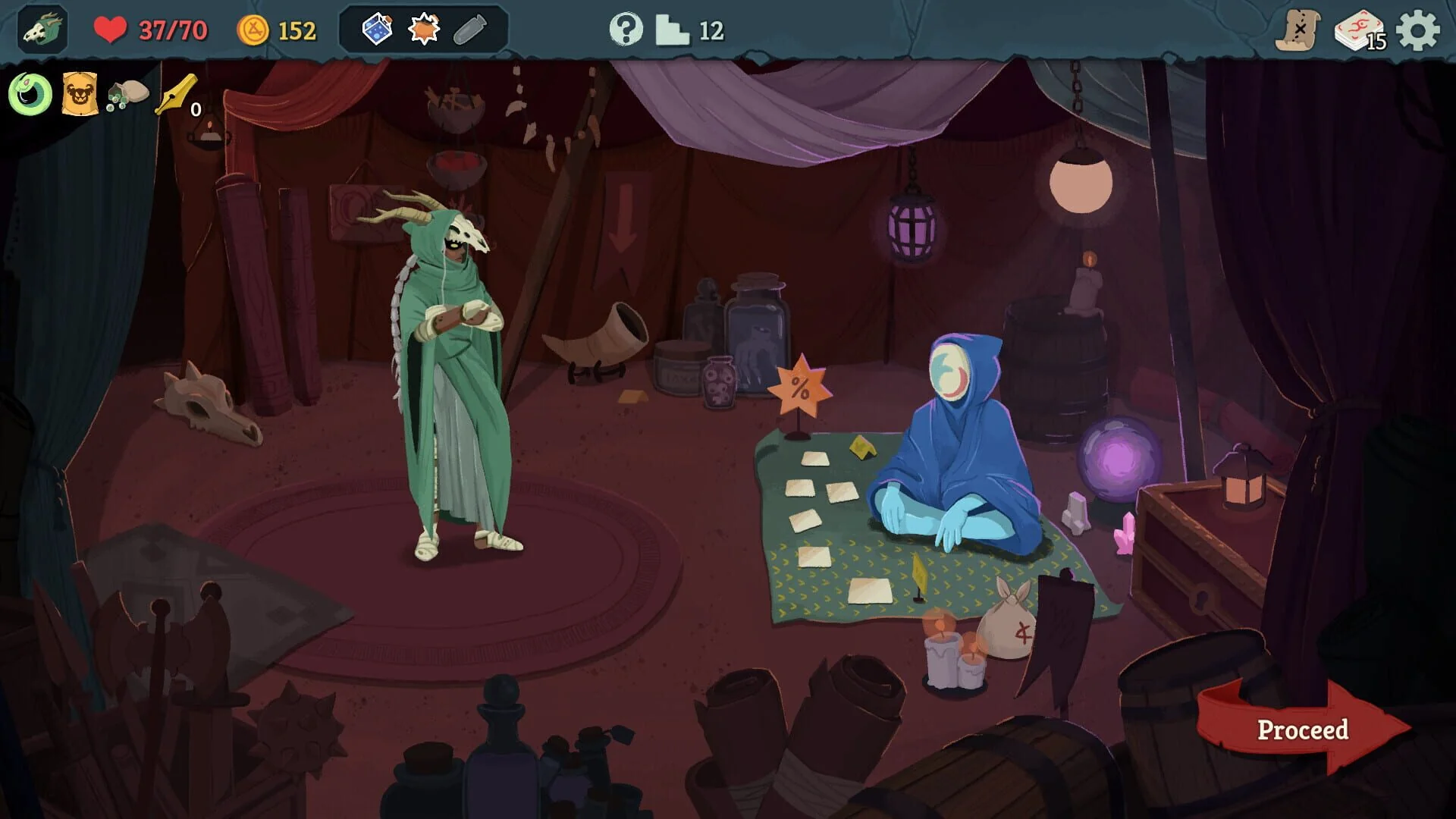
Slay the Spire 2 Co‑op: From Solo Obsession to Shared Addiction
The first hour I spent in Slay the Spire 2 felt almost eerily familiar. Same vibe, same rhythm, that same little knot in my stomach when I hover over an elite node I probably shouldn’t click. For a while, it might as well have been “more Slay the Spire,” which, to be clear, is hardly a complaint.
But the moment I dropped into my first co-op run, the entire mental model of the game shifted. The solitary, hyper-optimized headspace I’d built over hundreds of hours in the first game suddenly had to make room for one, two, sometimes three other human brains all trying to pilot this fragile, cobbled-together party through the same brutal gauntlet.
That’s when Slay the Spire 2 stopped feeling like an “iterative sequel” and started feeling like something new: a genuinely social, tactical roguelike that happens to be built out of cards.
Key Takeaways
- Co-op completely reshapes the game’s psychology – Relics, healing, and pathing become shared decisions instead of solitary optimizations.
- Multiplayer UI is smart and unobtrusive – Ghost cards, shared HUD info, and subtle cues make it easy to coordinate without drowning in clutter.
- Up to four-player runs feel like a tactical board game – Each deck is its own “class,” and synergies between players matter as much as individual builds.
- Communication is half the experience – No built-in voice chat, but Discord plus in-game map scribbles and gestures are more than enough to turn runs into stories.
- Altruism is now a core mechanic – Giving up the perfect relic or campfire upgrade for a teammate’s survival is often the correct and most satisfying play.
- Early Access rough edges are minor – A few balance wobbles and occasional jank, but nothing that undermined our sessions.
- For veterans, co-op feels like the “main mode” – If you’ve already wrung the original dry, this is the fresh angle you were probably hoping for.
My Slay the Spire Background: Why Co-op Felt So Wrong… Until It Didn’t
I came into Slay the Spire 2 with a lot of baggage. I’m one of those people who treat the original game like a comfort food and a math puzzle rolled into one. “One more run” has turned into “accidentally 3 AM” more times than I’d like to admit.
For me, the original Slay the Spire is almost meditative. I put on headphones, pull the game up on PC, and vanish into that loop of draw–calculate–optimize–regret. Every decision is mine. Every disaster is mine. That solitary ownership is part of the appeal.
So when Slay the Spire 2 started teasing co-op, my reaction was… skeptical, bordering on hostile. Deckbuilding roguelikes are about ruthless personal discipline; why would I want three other people tugging on the decision-making wheel? I’d seen the multiplayer mods for the first game and bounced off the idea completely.
Then I actually tried it. Within two nights, I’d spent more time in co-op than in solo. That was not on my bingo card.
First Co-op Run: Familiar Cards, Totally New Headspace
My first proper multiplayer run was a two-player session: me on a bruiser-style character, my friend on a more technical caster. It looked like “normal” Slay the Spire 2 at a glance-same map, same enemies, same card-driven combat. But everything about how I thought through my turns changed.
Enemies are shared across the party, so we both see the same intent icons and health bars. Our energy, HP, and card draw sit in a neat cluster at the top-left of the screen, color-coded and easy to parse at a glance. When my friend hovers over a card, it appears as a translucent “ghost” above their character-a silent way of saying “I’m thinking about this one” without spamming voice chat.
The core loop is still turn-based, but everyone shares the same turn. Cards from all players can be played in any order, as long as you have energy. That means sequencing matters not just inside your deck, but between decks.
In that first big elite fight, I learned this the hard way. I had a card that made enemies take extra damage that turn-classic “set up the spike” debuff. My friend, sitting on a hand full of chunky orbs and scaling effects, got excited and started unloading before I could squeak out the word “wait.” Their play was objectively good, but if they’d held a second for my debuff, the numbers would have been disgusting.
We still won the fight. But it was the first time I felt the friction that co-op introduces: you’re no longer optimizing in a vacuum. You’re solving for your deck, sure, but also trying to mesh with another person’s rhythm and understanding of the game.
How Slay the Spire 2’s Co-op Actually Works
Over a few dozen hours, I bounced between two-, three-, and four-player runs. Under the hood, the design is clever and actually much more restrained than I expected.
Shared Enemies, Individual Decks
Each player has their own deck, relics, gold, and potions. You’re not mashing everything into one janky kitchen-sink build. Instead, think of it like a party-based RPG where each character is just… a full Slay the Spire deck.
Enemies and encounters, meanwhile, are shared. Health pools scale up for multiplayer, so fights don’t evaporate instantly just because you’re stacking four players’ worth of cards. Attacks that hit “all enemies” help everyone, and effects that target a single enemy are visible to the whole party. If your friend applies a nasty debuff, you can immediately build around it.
One Turn, Many Hands
Crucially, everyone acts on the same turn. There’s no “Player 1, then Player 2” queue. If you’ve ever played co-op board games like Gloomhaven or Spirit Island, the vibe is similar: you pre-plan, then organically weave your plays together.
You can:
- Open by applying debuffs that amplify damage.
- Let a defensive specialist patch up the party with block and mitigation.
- Hold back damage cards until after your ally lands a key setup effect.
- Use utility cards that interact directly with teammates, like boosting their draws or passing buffs.
It sounds chaotic, but the UI and tempo keep it coherent. Ghost cards show what people are hovering. Energy totals are visible, so you know whether someone has the juice to pull off what they’re planning. There’s no forced initiative order to wrestle with; you organically establish one through conversation and practice.
Undoing the “Whoops, I Ended My Turn” Moment
One small but huge design touch: you’re not instantly locked the second you hit “End Turn.”
There were multiple times where I snapped the button out of habit—muscle memory from solo play—only to realize I still had energy and a crucial block card in hand. In pure single-player, that’s just your punishment for being sloppy. In co-op, while another player is still thinking through their moves, you can click again to jump back in and finish playing your cards.
It feels almost like bending the rules, but it’s a smart concession to the reality of multiplayer: more chatter, more distractions, more room for human error. It preserved a ton of runs that would have been lost to “I didn’t mean to click that” moments.
Deckbuilding as a Team Sport
In solo Slay the Spire, you build your deck around a single coherent game plan—poison, strength scaling, power stacking, whatever. In co-op, that mindset shifts to party composition. It’s not just “What is my deck doing?” but “What hole in our lineup can I fill?”
Complementary Roles and Synergies
On one run, I went all-in on debuffs and control while a friend built a pure damage cannon. My job was to keep enemies vulnerable, weak, and occasionally locked down with stuns or weird status effects. Their job was to erase anything I’d prepped. We were almost playing a rhythm game: I telegraphed when I had a big damage amplification card lined up, and they’d hold their multi-hit or orb burst for that exact moment.
Later, in a three-player party, we tried a different structure:
- Player 1: Frontline tank with tons of block, taunt-like effects, and sustain.
- Player 2: Scaling damage dealer that needed time to wind up.
- Me: Hybrid utility, throwing out targeted buffs, card draw, and the occasional panic button.
Cards and relics that would feel “cute but suboptimal” solo—things that hinge on somebody else doing something big—suddenly had a real home. There are effects that explicitly reference allies or interact with their plays, and they hit differently when you’re firing them off in sync with an actual person rather than some abstract co-op fantasy in your head.
Shared Knowledge, Shared Mistakes
An underrated aspect of co-op is how much it rewards game knowledge, and how brutally it exposes misunderstandings.
In one run, my friend, who has hundreds of hours in the first game, immediately read my class choice and starter cards and started planning around them. They knew I had access to a debuff that would spike their damage; I knew they were going to take scaling power cards that paid off over several turns. Our pathing and card picks naturally leaned into that plan.
In another, we dragged in a newer player. The whole tempo changed. We had to talk through why certain cards were better in a thinner deck, or why picking three different archetypes in one list is a trap. It was basically a live teaching session wrapped inside a roguelike beatdown. When they misplayed, we didn’t just shrug and restart—we tried to salvage the mess as a group.
That’s the part that surprised me most: co-op made me care about someone else’s deck, not in a “backseat driver” way, but in the same way you care about a raid composition or a squad in a tactics game. You want them to be strong because your run depends on it.
Relics, Healing, and Learning Not to Be Greedy
In the original game, I hoard relics like a dragon. That row of tiny icons across the top of the screen is your personal history of good decisions and shameless high rolls. In Slay the Spire 2’s co-op, that instinct runs headfirst into a new reality: your greed can actively sabotage the team.
“You Take It.” “No, You Take It.”
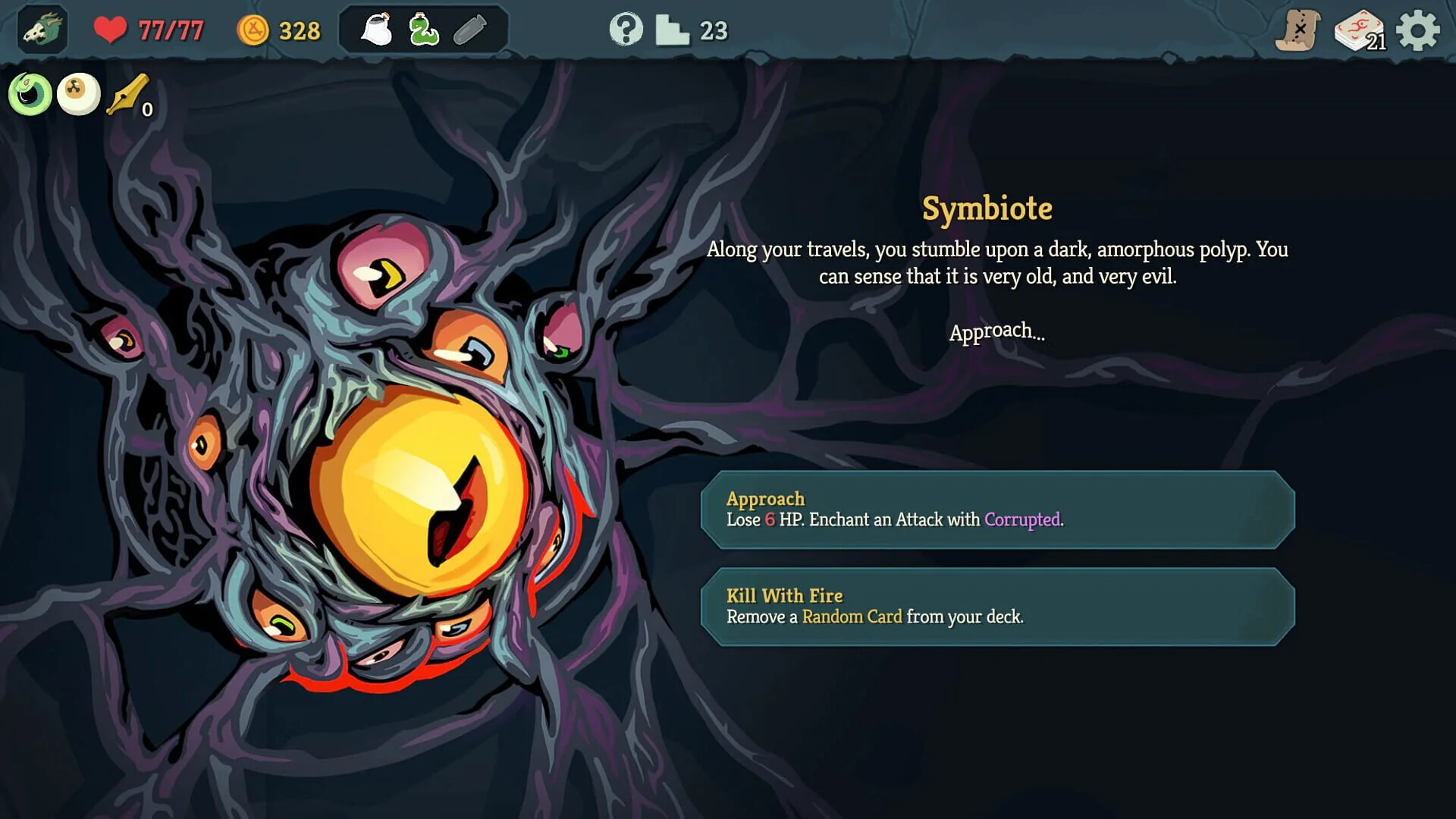
After elites or events that drop relics, the game lets you decide who gets what. Mechanically, it’s simple. Socially, it’s one of the most interesting bits of design in the whole mode.
We had so many polite standoffs:
- “This one is insane for your build, you should absolutely take it.”
- “Yeah, but your deck is weaker. If you don’t scale, we all die.”
- “Okay, but if I get this, your combo never comes online and the boss will flatten us.”
Sometimes we’d settle it logically—who benefits more, whose archetype it actually fits. Sometimes we’d shrug and play rock–paper–scissors with the in-game emotes and let fate decide. The crucial point is that relic decisions stop being purely self-centered optimizations. You’re always weighing individual power spikes against party survivability.
Campfires: Training vs. Triage
Campfires feel completely different in co-op. In solo, the choice to upgrade versus heal is a pure self-interest calculation. In multiplayer, you start getting questions like:
- Do I upgrade this card that makes my whole party stronger?
- Or do I rest so I don’t die to a random hit that my support can’t cover?
- Should I heal instead of upgrading, because my teammate needs that buffed card to keep us alive?
One run really stuck with me. My friend kept skipping personal upgrades to use healing options on me. On paper, it was the “correct” choice—I was the one anchoring our damage. In practice, we staggered into the next act underpowered and got flattened. We both knew exactly where the turning point had been.
We didn’t walk away annoyed. If anything, it made the run more memorable. The failure came from a very human kind of generosity: worrying too much about another player’s short-term health and not enough about the long-term power curve of the party.
Misplays, Chaos, and That One Knowledge Demon
Everyone has “I threw the run” stories from the first Slay the Spire. In co-op, those stories get louder, pettier, and much, much funnier.
My favorite mess involved the Knowledge Demon event. My teammate, playing a fragile build heavy on damage and light on defense, took a stacking damage-over-time effect from the demon for a card they were sure would turbocharge their deck later. We did the math together. It was suicidal. They clicked anyway. “I’ll be fine,” they said. Narrator voice: they were not fine.
Watching their HP tick down every fight while I scrambled to throw potions and block effects at them was like trying to keep a particularly determined lemming from diving off a cliff. They died mid-encounter in the next act. My utility-heavy build, thankfully, had picked up a card that turned deaths (including my minions) into a massive defensive payoff. I barely survived the fight, dragging their revived body into the next area like a paramedic who just watched their patient pull out their own IV line.
Moments like that are where Slay the Spire 2’s co-op shines. The game is still punishing. Misplays still matter. But the way you remember them changes. It’s not “I misclicked and lost.” It’s “Remember when you took that cursed debuff and I had to play undertaker just to keep the run alive?”
Talking Without Talking: Discord, Doodles, and In-Game Cues
There’s no native voice chat in Slay the Spire 2, and I honestly don’t miss it. Every co-op session I played lived on Discord, with the game’s own tools filling in the gaps.
Map Scribbles and Silent Arguments
The world map might as well be a whiteboard. You can draw directly on it, and the drawings sync across the party. Inevitably, the very first thing anyone does is doodle crude nonsense, but once that’s out of your system, it becomes a surprisingly practical planning tool.
We’d mark:
- Safe routes with multiple campfires.
- Risky elite-heavy paths we’d only take if our decks were popping off.
- Shop nodes we wanted to hit after specific events or relics.
Disagreements became a kind of silent mini-game. One of us would circle a path. Another would aggressively scribble it out and draw arrows to a different one. You can set different paths and let the game’s tiebreaker system decide where the party actually goes, but we almost always resolved it by doodling and arguing until someone relented.
Ghost Cards and Implicit Coordination
During combat, the little touches matter most. Those translucent “ghost cards” hovering over each player’s character while they’re thinking do a lot of heavy lifting. If I see my ally hovering a big AoE damage card over a nearly dead enemy, I know not to waste my own on cleanup. If I watch them flick a defensive card back and forth, I can offer to cover block that turn instead.
The game stops just shy of over-explaining everything. You don’t see a live stream of someone else’s entire hand, which preserves both privacy and a bit of mystery. You see enough to collaborate without being tempted to micromanage every move your friend makes.
Difficulty and Balance in Co-op
Multiplayer in any roguelike runs into the same design problem: how do you keep it hard enough to be interesting when you’ve effectively multiplied player power? Slay the Spire 2 answers that mostly by scaling enemy health and tuning certain encounters around multi-player chaos, rather than throwing in elaborate bespoke co-op-only bosses.
Across my runs, a few patterns stood out:
- Fights last longer, which gives scaling builds time to cook but punishes fragile “glass cannon” parties.
- Chip damage and status effects add up when multiple players are each taking hits or mismanaging defense.
- Support roles feel much more viable, because raw single-deck damage isn’t the only path to victory.
There were definitely moments where balance felt a little off—certain events or elites that seemed tuned more around solo assumptions than four-player mayhem—but they were the exception, not the rule. And given that the game is in Early Access, some of those edges are likely to move around as patches roll out.
What matters is that losses never felt cheap. When we wiped, we could almost always point to a clear chain of decisions: wrong relic distribution, greedy pathing, mutually incompatible deck plans, or someone getting too fancy with an experimental archetype that didn’t pay off.
Performance, Stability, and Early Access Quirks
On the technical side, my experience on PC was mostly uneventful in the best possible way. Latency was a non-issue in every session I played; card plays resolved snappily, enemy animations stayed in sync, and we never had a run-ending desync or crash.
A couple of times, we ran into minor oddities—visual hiccups where a card’s highlight lingered a bit too long, or UI elements briefly overlapping in a busy four-player fight—but a quick re-sync or scene transition always cleared it. Nothing ever corrupted a run or forced a reboot.
Art-wise, you can see spots where the game is still in flux. Some card art and animations feel a little placeholder-y compared to the more polished pieces. None of it affected readability or fun for me, but if you’re the type who equates “Early Access” with “wait for 1.0,” just know that the co-op foundation already feels strong and functional, not like a tacked-on experiment.
Solo vs. Co-op: Which Feels Like the “Real” Slay the Spire 2?
After all this, the obvious question is whether co-op overshadows solo. For me, the answer splits depending on who you are.
If You’re New to Slay the Spire
If this is your first taste of the series, I still think solo is the best starting point. You’ll learn the core rhythms, archetypes, and enemy patterns without the mental overhead of worrying about three other decks. Once you’ve got a feel for how fragile a run can be, dipping into co-op becomes a lot more enjoyable.
If You’re a Veteran of the First Game
If you’ve already sunk dozens or hundreds of hours into the original, co-op is the main reason to be excited about Slay the Spire 2 right now. The new characters, cards, and balance tweaks are good, but the multiplayer mode is what actually rewires your brain.
Solo runs in Slay the Spire 2 feel like a very smart refinement of something you already know. Co-op runs feel like you’re learning a new subgenre: part deckbuilder, part tactics RPG, part chaotic board game night with friends.
Who Slay the Spire 2 Co-op Is Really For
After quite a few late nights, here’s who I think will get the most out of co-op:
- Slay the Spire obsessives who want a reason to re-engage with the formula in a way that actually challenges their habits.
- Board game and tabletop fans who enjoy co-op strategy puzzles, shared planning, and loud post-mortems about what went wrong.
- Small Discord friend groups looking for a game you can play semi-regularly, picking up long-running save files like you would a campaign.
- Theorycrafters and build nerds who want to explore party compositions and cross-deck synergies instead of just solo archetypes.
If you hate coordinating with other humans, or you treat every run as a perfectly tuned solitaire puzzle and nothing else, you might bounce off the chaos of co-op. That’s fine. Solo is still here, and it’s still excellent.
But if you’ve ever wished you could share the highs and disasters of a perfect—or perfectly doomed—Slay the Spire run with friends in a way that feels properly integrated rather than modded-on, this is exactly that.
Bottom Line: A Solitary Classic Turned Social, and It Works
I went into Slay the Spire 2’s co-op expecting a neat side mode. What I found was a structural change in how the game feels, one that pokes at all the right parts of the original’s design without diluting what made it great.
The foundations are still the same extraordinary mix of deckbuilding and roguelike structure: hard choices, unpredictable runs, brutal punishments for sloppy play. But wrap that in co-op, and you get new emotional beats—arguments over relics, sacrificial campfire decisions, frantic “wait, don’t end turn yet!” shouts—that simply don’t exist in solo.
On a purely mechanical level, it’s impressive: smart UI, clean implementation, and difficulty tuning that mostly hits the mark even in Early Access. On a human level, it’s even better. I remember my co-op runs more vividly than my solo ones, not because they were more successful, but because they felt like stories we built together instead of puzzles I solved alone.
Rating for co-op (in its Early Access state): 9/10. It’s already strong enough to be the main attraction, and if Mega Crit keeps iterating with the same care they’ve shown so far, it’s going to become one of the definitive co-op strategy experiences on PC.
TL;DR
- Slay the Spire 2’s co-op takes a famously solo deckbuilding roguelike and turns it into a shared, tactical experience.
- Multiplayer is thoughtfully integrated with shared enemies, individual decks, and a single party turn where everyone’s cards interplay.
- Relic and campfire decisions become social dilemmas about who should be strong now versus who needs to scale for later.
- UI touches like ghost cards, shared HUD, and map drawing make coordination smooth without overwhelming you.
- No built-in voice chat, but Discord + in-game tools are more than enough to support serious strategy and stupid jokes.
- Balance feels mostly solid, with longer, more tactical fights and lots of room for support and control roles to shine.
- Early Access quirks exist but are minor—nothing that undercut the fun or stability of our runs.
- If you loved the first game, co-op is the reason to play Slay the Spire 2 now; it makes an already great formula feel genuinely new again.
Leave a Reply