Planet of Lana 2 makes its duo more powerful without losing what made them special
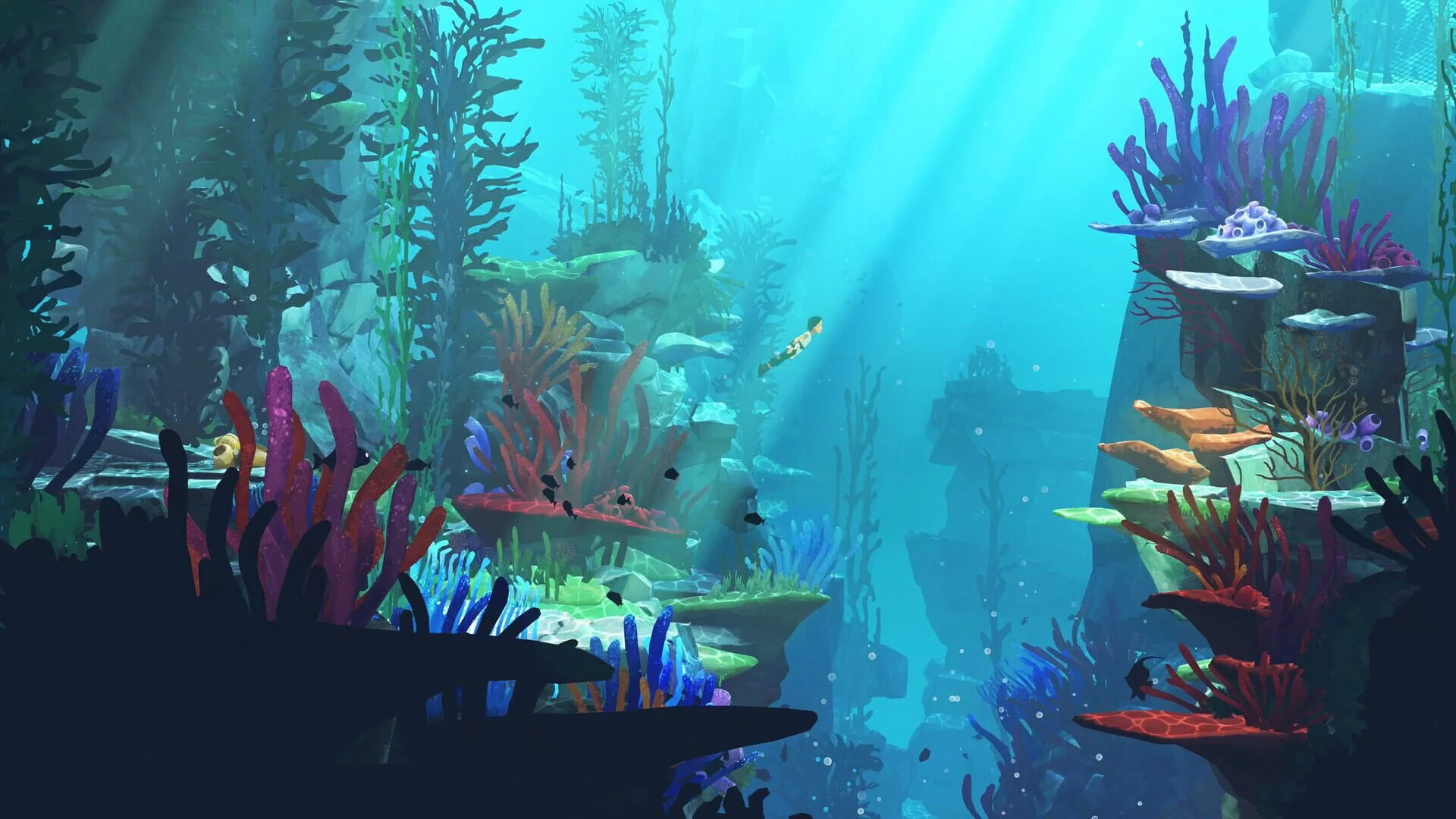
The moment I realised Planet of Lana 2 had quietly levelled up from “nice sequel” to “oh, this really gets it” was halfway through an underwater infiltration. I was juggling Lana’s careful breaststroke between crackling electric sharks, steering hypnotised fish into tight tunnels, and coaxing an anxious Mui along safe ledges above it all. It felt less like solving a single puzzle and more like conducting a tiny, wordless heist movie starring a girl, her alien cat, and a handful of bewildered sea life.
The first Planet of Lana won me over with its gentle pacing, painterly vistas and the simple joy of having a companion who actually pays attention when you boss them around. Planet of Lana 2 doesn’t rip that up; it stretches it out. Lana moves better, Mui is wildly more capable, and puzzles that once fit neatly inside a single screen now sprawl across caverns, jungles and industrial facilities. It’s bigger, cleverer and better-looking, even if a few of its grander story ideas barely get off the ground.
Key Takeaways
- Sharpened platforming: Sprinting, sliding and wall-jumping give Lana’s movement a welcome flow that the original sometimes lacked.
- Mui is genuinely upgraded: Your companion has greater range and more nuanced creature control, making them feel like a true co-protagonist.
- Bigger, multi-stage puzzles: Challenges now span multiple screens and characters, but remain readable and rarely feel punishing.
- Gorgeous hand-painted art and evocative score: Visually and musically a step above the first game, with more ambitious setpieces.
- Emotionally grounded, thematically shallow: Lana and Mui’s relationship lands, but the cult and its environmental themes feel underdeveloped.
- Great fit for modern PCs and Steam Deck OLED: Runs smoothly and feels right at home with a controller, both at a desk and on the couch.
- Verdict: A thoughtful, heartfelt sequel that meaningfully deepens the original’s mechanics and scope. Rating: 8.5/10.
First hours: from drab corridors to flowing, athletic platforming
Planet of Lana 2 starts in the least flattering place it could: steel-grey corridors. Coming off the lush forests and golden horizons of the first game, I was a bit deflated. Then I nudged the stick forward, hit jump, and realised why the sequel chooses to put you through this training-course bunker.
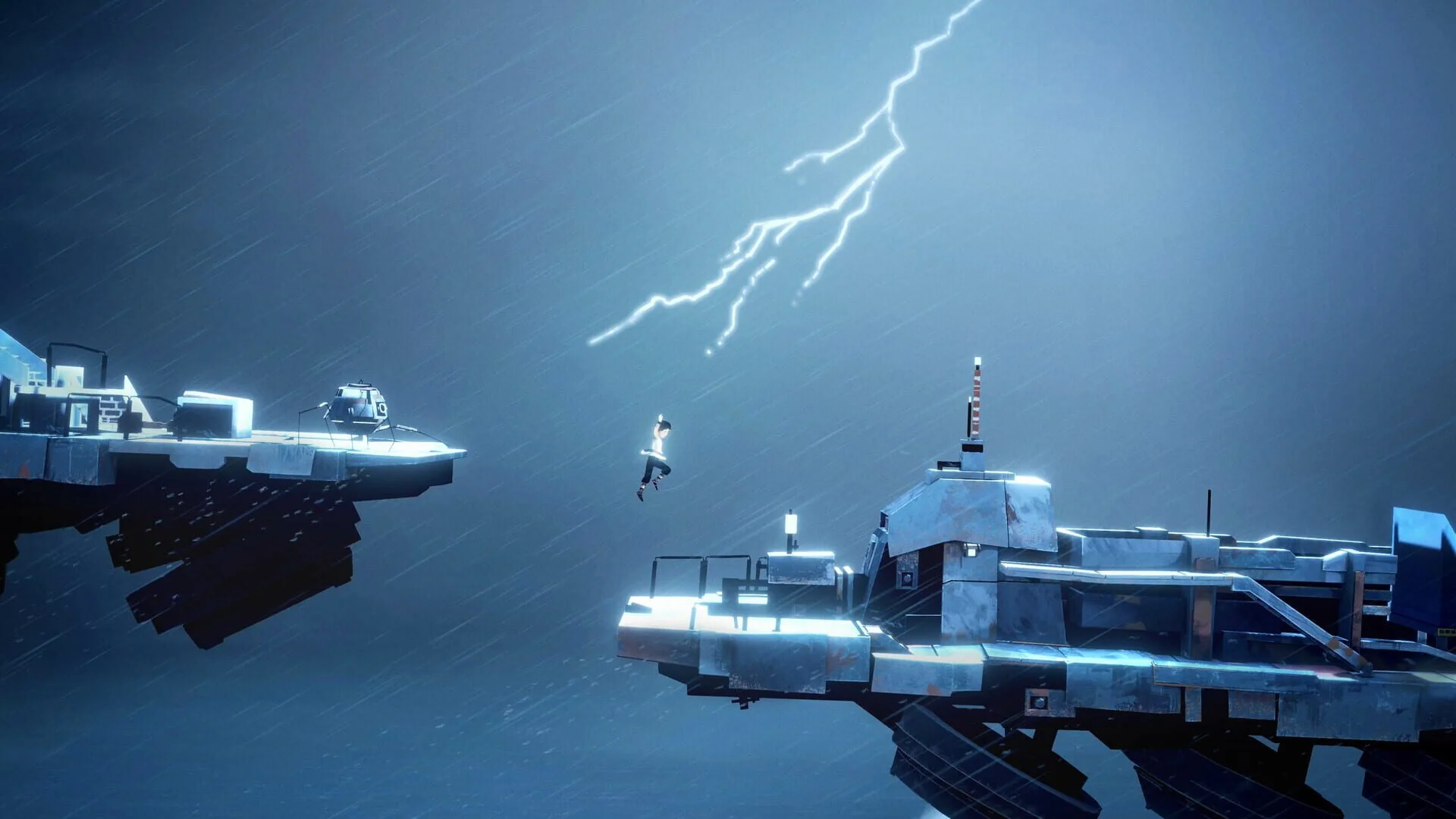
Lana has been practising. From the very first minutes she can sprint, slide and wall-jump, and those simple additions change the entire rhythm of play. Where the original sometimes felt like a beautiful but slightly stiff procession from ledge to ledge, Planet of Lana 2 lets you flow. You still have those measured, cinematic moments – carefully timing a drop past the sightline of a patrolling robot, or creeping over a collapsing beam – but the connective tissue is much livelier.
By the end of the opening chapter I was chaining moves instinctively: sprint into a slide under a closing door, hop straight into a wall-jump up to a dangling rope, then call Mui to scamper along a separate path. It’s not a precision platformer in the Celeste sense – the input windows are generous, and it’s more about feeling nimble than frame-perfect challenge — but the improvement over the original is obvious the moment you hit your first proper chase sequence.
Importantly, this new agility never undermines the mood. The game doesn’t suddenly become an action-platformer. Instead, the extra movement options keep traversal from becoming a chore during its more expansive levels, so the game can ask more of you without bogging you down in clumsy climbs.
Mui 2.0: no longer just “the cute one”
If Lana’s spruced-up moveset is the first thing you notice, Mui’s evolution is what quietly powers most of the sequel’s best moments.
In the first game, Mui was already a delight: a strange, cat-like blob buddy who’d follow simple commands and occasionally mesmerise local wildlife. In Planet of Lana 2, that basic idea has been stretched in every direction. You still point with a cursor to tell Mui where to go, but their range is dramatically expanded. They’re no longer tethered to operating within arm’s reach of Lana, which means you can send them bounding across the far end of a ravine, or up to high ledges that Lana can’t yet reach.
More importantly, their influence over creatures has grown. You’re not just nudging animals into slightly different positions. Mui can effectively “puppet” certain wildlife, and the game leans into that. Ink-spewing fish become remote-control torpedoes you navigate through coral mazes. Colonies of sticky, rolling cloud creatures turn into living, flammable marbles you flick around to solve Rube Goldberg-style setups. Larger insects can be led, cajoled and, occasionally, imprisoned to act as living machinery.
This is where Planet of Lana 2 gets strangely dark, in a way the game never fully interrogates. Those helpful critters? They can die. Often. Sometimes by mistake; other times because the solution requires you to send them to their doom — cloud-balls rolling into a fire pit to light a fuse, fish used as bait for the ever-hungry sharks, a giant bug locked away to starve so a door stays open. The game never scolds you for it, and the creatures respawn if you need more, but I couldn’t quite shake the sense that Lana and Mui are quietly wreaking havoc on the local ecosystem in the name of family.
I found the dissonance oddly compelling rather than outright damning. It adds a faintly sinister undercurrent to the otherwise cosy tone, especially once the story starts peeling back who Mui is and where they came from. Flashback sections sprinkle in a backstory that goes beyond “adorable sidekick,” hinting at prior bonds and loyalties that Mui can’t bring themself to fully share with Lana. Both characters speak in an endearing gibberish, but the animators do a lot of heavy lifting with body language. The relationship that was already the heart of the first game becomes richer, and a little sadder, here.
Bigger, smarter puzzles that rarely turn into brick walls
Planet of Lana 2’s most obvious structural change is how it treats its puzzles. The first game mostly confined its brainteasers to single-screen vignettes: a contained little problem, solved, then you’d move on. It was elegant but necessarily small-scale.
The sequel still has its bite-sized conundrums, yet many of its best sequences now sprawl across large, multi-stage spaces. Instead of “the puzzle is this room,” you get stretches where “the puzzle is this entire underground complex” or “this whole reef system.” You might start by clearing a path for Lana, then switch to Mui on a distant ledge, then swap to a mesmerised fish threading between coral, then back to Lana to take advantage of the new opening.
In less careful hands, that kind of escalation can turn a chill puzzle-platformer into a momentum-killing slog. The surprise is how readable and tactile these larger constructs feel. Most sequences have clear visual language — cables, pipes, ruins, fauna placement — that gently steer you towards the next step without a giant glowing arrow spelling it out. Crucially, inputs are forgiving, and failure tends to reset quickly. When I mis-timed a swim and fed Lana to a shark, the restart was immediate enough that it nudged me to try a slightly different angle rather than stew in frustration.
The underwater infiltration sequence, which many will recognise from the pre-release demo, is Planet of Lana 2 in microcosm. Lana nervously swims between pockets of safe coral while you guide hypnotised fish to act as moving cover and decoys. All the while, Mui stays perched on higher platforms, terrified of touching the water, so you’re running a three-way plate-spinning act between their positions. It’s intricate but never obtuse, and when I finally threaded the last fish past a patrol route and slipped Lana into the exit tunnel, it felt properly earned.
The game deserves credit for avoiding “crate fatigue”, that killjoy of so many 2.5D adventures. Yes, you’ll drag the odd box or two, but the expanded toolset of creatures, environmental hazards and dual-character coordination means your brain is usually engaged with something more interesting than “push heavy object to obvious plate.” Planet of Lana 2 becomes more complex than its predecessor without tipping over into joyless, slow-motion trial-and-error.
A world worth saving: art direction and soundtrack
Once you break out of the opening facility, Planet of Lana 2 quickly reminds you why this setting was worth revisiting at all. It is gorgeous.
The hand-painted look returns, but there’s a noticeable bump in ambition and polish. The breadth of locations alone is impressive: dense, misty forests; snow-smeared mountain passes; tropical undersea caverns; rusted sci-fi structures half-swallowed by vines; and, tantalisingly, a gleaming city on the horizon. Every biome feels like someone’s favourite painting, and the game has the good sense to regularly slow down and let you just walk through it, basking.
Setpieces make better use of this art than before. A desperate sprint through a burning jungle genuinely rattled me, trees collapsing in the foreground as embers turned the air into a hazy orange screen. Conversely, easing a stolen submersible down into the dark, humming depths had the kind of quiet tension I usually associate with horror games, even though this isn’t one. The camera pulls back, the palette cools, and the music strips down to sparse, nervous notes.
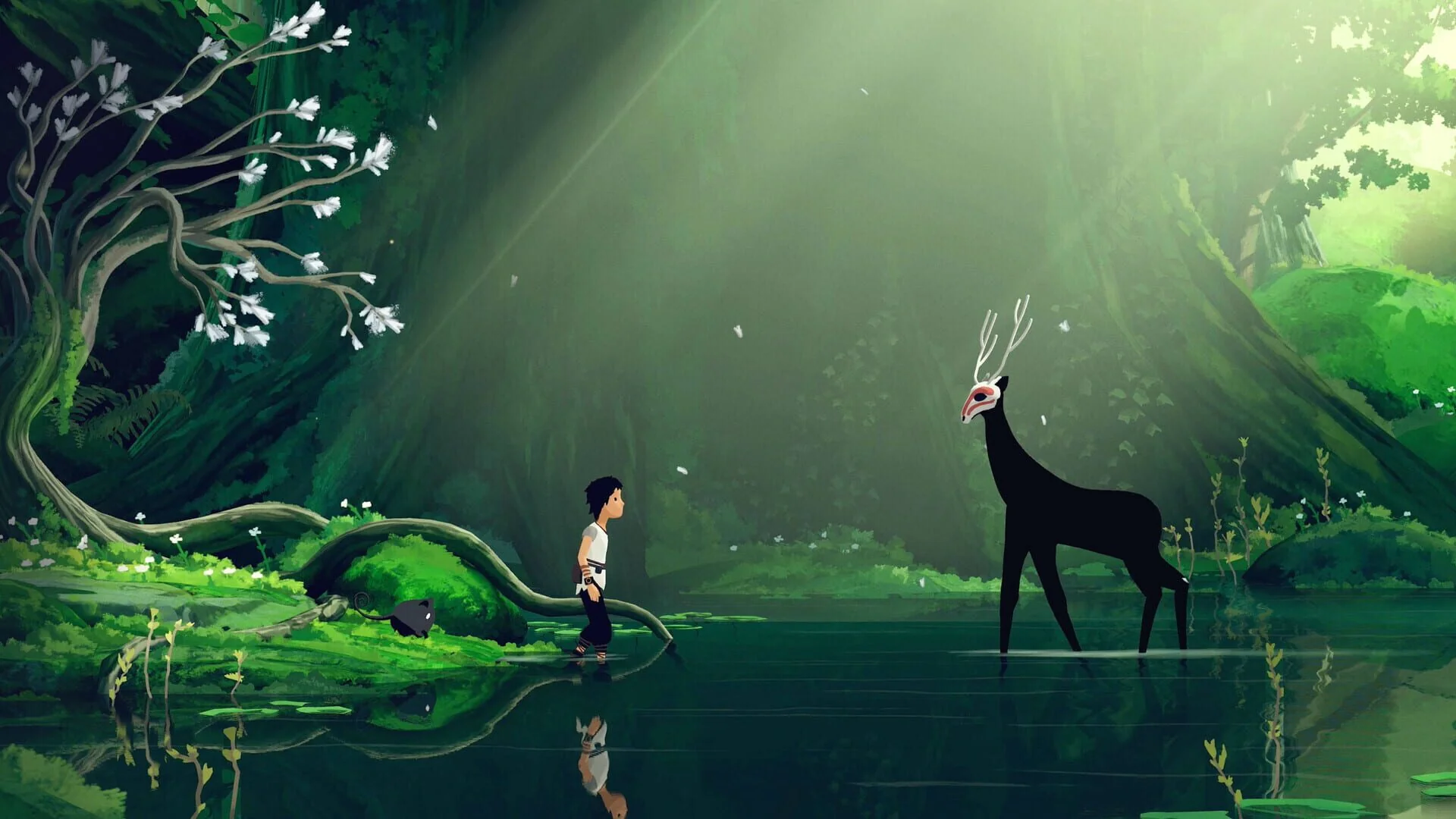
The soundtrack does a lot of work here. It leans heavily on pensive piano, warm strings and understated synth pulses — nothing bombastic, but a constant emotional undercurrent. Long stretches of traversal are carried by soft motifs that swell without ever drowning you. When the game wants to make something feel monumental, it knows exactly when to let the music push forward, then dial it back so you can hear the crunch of snow, the splash of water, or Mui’s little chirps as they scamper ahead.
It’s all in service of a tone that remains surprisingly hopeful for a story about ecological damage and cultish violence. For every sprint from killer machines, there’s a moment where the game says, “Hey, stop and look at this.” Most of the time, I was happy to oblige.
Story: intimate stakes, fuzzy big picture
The hook this time around is simple: having previously saved her sister from alien robots, Lana now has to save her niece, who’s been poisoned by a mysterious boulder casually dumped by a passing cult. To heal her, Lana heads out on essentially a multi-part fetch quest for rare ingredients that can be combined into a cure.
On paper, I winced. “Collect the things to make the magic medicine” is about as video gamey as plots get. In practice, the framing works better than you’d expect. The ingredients are mostly excuses to send you into new corners of the planet, each with their own self-contained little narrative drama or character beat. It also naturally slices the adventure into chapters that let the game hop between flashbacks, present-day exploration, and occasional big action sequences without feeling disjointed.
Where the story really clicked for me was, unsurprisingly, in the quiet, personal beats. Flashbacks into Mui’s past give context to their skittishness and occasional hesitation in the present. Lana’s interactions with her family stay wordless but clear, communicated through animation and framing more than dialogue. The ending, without spoiling specifics, lands in that bittersweet territory the first game flirted with but didn’t fully commit to; it makes sense of the journey in a lived-in, character-centric way.
The wider thematic ambitions are where Planet of Lana 2 stumbles a bit. The cult that dumps toxic stones and slaughters animals seems set up as the face of an environmental allegory. They strip the land, leave waste everywhere, and stomp through habitats. For a while I expected a Miyazaki-style broadside against industrial greed and human arrogance — the aesthetic inspirations are not exactly subtle. But the game never really takes that extra step. The cult mostly exists as a shorthand for “these are the bad people hurting Lana’s family,” and the environmental angle is more background dressing than explored idea.
The shining city on the horizon is another missed opportunity. It appears in key art and is teased throughout the campaign, a stark contrast to the wilds you spend most of your time in. When you finally get there, the visit is striking but shockingly brief, and you spend most of it in its guts — sewers, maintenance tunnels, storage. What little you see of its surface suggests a fascinating place, but the story doesn’t linger long enough to say anything meaningful about how it functions, or how it coexists (or doesn’t) with the rest of the planet.
None of this sinks the experience — the game is more interested in Lana and Mui than in deep sci-fi worldbuilding, and on that front it delivers. Still, I came away feeling like Planet of Lana 2 flirts with some big, chewy ideas and then backs away right when things get interesting.
Performance and feel on PC and Steam Deck OLED
I played Planet of Lana 2 primarily on a desktop PC (Intel Core i9-10900K, 32GB RAM, Nvidia RTX 3090, Windows 10) and then re-ran large chunks on a Steam Deck OLED to see how well it handled a portable setup.
On the PC side, performance was uneventful in the best way. This isn’t a hardware-melting blockbuster, and my system had no trouble keeping things smooth. Load times were brief, visual options were straightforward to tweak, and I ran into no crashes or progress-breaking bugs during my playthrough. The art style scales nicely, too; even when I intentionally dropped settings to test, the painterly look held together better than more realistic games tend to.
On the Steam Deck OLED, Planet of Lana 2 feels almost tailor-made for the hardware. The slower pacing and reliance on silhouettes and bold colours mean the smaller screen never felt cramped, and the OLED panel makes those sunsets, deep-sea blues and neon cult machinery really pop. Controls map cleanly to a gamepad layout — this is very much a sit-back-with-a-controller experience — and I was comfortable chipping away at puzzles in 20-30 minute bursts without any fatigue.
Battery drain and frame pacing will obviously vary depending on your exact settings and tolerance, but in my time with it the Deck version felt more than solid enough to recommend if you prefer your melancholy sci-fi on the couch or in bed.
Who Planet of Lana 2 is really for
If the first Planet of Lana did nothing for you, this sequel probably won’t convert you — it’s an evolution, not a reinvention. But if you even mildly enjoyed the original, Planet of Lana 2 feels like the version that fully realises what this series wanted to be from the start.
It’s a sweet spot game for players who:
- Enjoy cinematic puzzle-platformers but don’t want punishing difficulty.
- Care more about atmosphere, art and character relationships than deep branching narratives.
- Like the idea of co-op style problem-solving, even though it’s technically single-player.
- Are happy to think for a minute or two on a puzzle, but don’t want to alt-tab to a guide every half hour.
It’s less ideal if you’re looking primarily for replayability, combat or systemic freedom. This is a curated, linear adventure with carefully staged highs and lows. Once it’s over, there’s not a huge mechanical reason to go back beyond re-experiencing favourite moments or hoovering up missed secrets.
Bottom line: a stronger, more confident sequel with a few missed chances
Planet of Lana 2 is the kind of sequel I like best: the kind that trusts what worked, pokes at what didn’t, and then quietly broadens everything rather than chasing spectacle for its own sake. Lana’s movement finally feels as agile as the world deserves. Mui graduates from mascot to genuine partner, both mechanically and emotionally. Puzzles swell from tiny dioramas into elaborate, multi-character setpieces, yet stay approachable and satisfying.
I do wish the game had more to say about its cult, its pollution metaphors, and that tantalising city on the hill. Those elements hover at the edges without ever quite coalescing into the kind of bigger-picture statement the art and premise seem to be pointing toward.
Even so, when I think back on my time with Planet of Lana 2, it’s the moments of wordless coordination and quiet companionship that stick: the first time I entrusted a whole chain of actions to a mesmerised school of fish, the way Mui would hesitate before certain flashback-tinged locations, the long walks through sun-dappled forests with nothing to do but push forward and listen to the score.
It might not be an all-timer, but it’s a beautifully judged, heartfelt follow-up that made me genuinely glad to return to this world.
Rating: 8.5/10
TL;DR
- What it is: A 2D puzzle-platformer sequel that expands the original Planet of Lana with better movement, a more capable companion and larger, multi-stage puzzles.
- What’s great: Lana’s sprint/slide/wall-jump flow; Mui’s extended range and creature control; sprawling but readable puzzles; stunning hand-painted art; evocative, restrained soundtrack; deeper emotional arc for Lana and Mui.
- What’s not: The cult and environmental themes stay surface-level; the much-teased city is barely explored; linear structure means limited replay value.
- Performance: Stable and smooth on a modern PC; looks and feels excellent on Steam Deck OLED with controller-friendly design.
- Buy if: You liked the first Planet of Lana, enjoy cinematic puzzle-platformers, or want a thoughtful, visually striking adventure you can finish in a few sittings.
- Skip if: You crave hard puzzles, combat-heavy gameplay, or big, systemic sandbox worlds.
- Final word: A bigger, smarter and more emotionally nuanced return to Lana’s world that stumbles in places, but shines where it counts most.
Leave a Reply